
SECTION 1.2 – OVERVIEW OF PFM
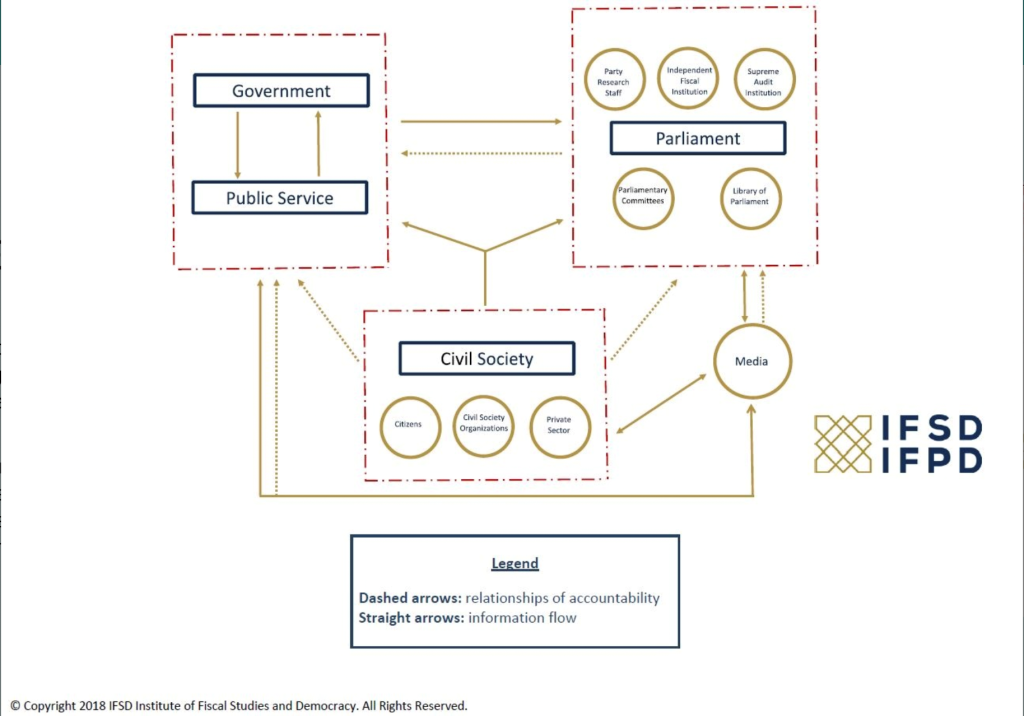
Overview:
This section introduces Public Financial Management (PFM), explaining its relevance to civil society organizations (CSOs). You will learn about the objectives of a PFM system and why transparency and openness are important dimensions to an effective and efficient PFM system.
Interactive Learning Module:
- What is PFM?
- What is Budget Transparency and why does it matter?
- The Budget Cycle
- Overview of Parliament’s role throughout the budget cycle
- Parliament & PFM: Roles and Responsibilities
- Parliament & CSOs: Ensuring Accountability
- Assessing the State of PFM in Your Country
- What is GRB and Why is it Relevant?
- PEFA Gender Responsive PFM Framework
- Action Kit on Engaging Parliaments in GRB
Why does budget work matter?
Watch two brief videos illustrating how engaging with government on budget issues can help civil society organizations and the public address pressing service delivery issues:
Reflect after watching the videos. Now proceed to answer the following questions to test your understanding of the video you watched.
Upload your answers in the comment box provided below
Your answers will be shared with the other e-course participants.
Leave a Reply
Questions for Consideration:
- How does CSO involvement in budget work help the public address key service delivery issues, and why is it important for governments to listen to their communities when making budget decisions? (Hint: In both videos, CSOs helped communities voice their concerns about issues like access to fertilizer and water services. Think about how CSOs can amplify community voices in the budget process.)
- In what ways can CSO budget work support parliament in ensuring that the government has spent money in line with its commitments after the budget is implemented? (One of the videos shows how data collected by CSOs highlighted gaps in service delivery and forced local officials to respond. Reflect on how CSOs can help track spending and outcomes after the budget is approved.)
- Why is it important for CSOs to play a role both in public participation during the budget process and in reviewing how public money is spent afterward? (Hint: The videos emphasize that CSOs not only help communities engage in the budget process but also ensure accountability afterward by providing evidence and monitoring results. Consider why both aspects are important.
Leave a Reply
What is Public Finance Management?
Public Finance Management (PFM) refers to the way governments manage public resources, including how they raise, allocate, spend, and account for them, and the impact of those decisions (short- and long-term) on society and the economy (Andrews et al 2013:3). It is concerned with the laws, institutions, processes, and systems that influence the management of public funds, including resource mobilization and debt management. A well-functioning PFM system is critical to effective service delivery and a stable economy.
The objectives of a PFM system include (Cangiano et al 2013:23-24 and Andrews et al 2013:6-7):
- Prudent fiscal decisions: PFM systems should help ensure that spending, deficits, and debt are managed to maintain economic stability and be sustainable over the medium-term.
- Effective Resource Allocation: Public money should be allocated to resources, sectors, and programs based on the evidence of program effectiveness and, in response to government’s policy priorities, which in turn should reflect the needs and priorities of the public, especially poor and marginalized communities.
- Efficient Delivery of Public Services: PFM systems should facilitate the effective and efficient control of funds so that public services are delivered to targeted beneficiaries and desired results are achieved. This objective encompasses the goal of PFM providing an orderly means for governments to raise and spend public money, such that government keeps promises reflected in the budget by executing budgets as intended and spending such that public funds deliver results and public services.
- Institutionalized accountability: PFM systems should help ensure money is being spent properly. Systems should track funds to service delivery units, generate timely, publicly accessible reports to allow comparison between budgets and actual spending, and include independent assurance on the accuracy of government reports, compliance with laws, and value for money.
What is budget transparency and why does it matter?
- According to the OECD, budget transparency refers to the full disclosure of all relevant fiscal information in a timely and systematic matter. It also encompasses public participation in the budget process and role and effectiveness of formal oversight institutions, including legislatures and supreme audit institutions.
- Budget transparency refers to the provision of timely, clear, comprehensive, and reliable public reporting on public finances. Examples include:
- During budget planning (the “formulation stage”), governments should release a Pre-Budget Statement (PBS) in a timely and complete manner.
- After the budget is implemented (the ex-post audit/oversight stage), audited annual financial reports should be released to show how funds were used.
- Transparency and participation can support efficient resource allocation and improvements in service delivery. A 2014 study showed how the adoption of participatory budgeting is associated with changes in resource allocation, including increases in health and education programs. Numerous case studies have shown how improved transparency has contributed to increased and improved budget allocations toward development goals.
- Transparency contributes to better governance. Cross-country studies show that transparency contributes to lower corruption when information provided is accessible and can be utilized to hold governments to account.
Now, consider these questions for some reflection on what you have learnt so far:
- Does your organization have any experience assessing or advocating for budget transparency?
- How would you go about assessing budget transparency in your country?
- What could you do with the information you find on budget transparency?
Upload your answers in the comment box provided below
Your answers will be shared with the other e-course participants.
Leave a Reply
-
November 5, 2024
1- PFM: Gestion des Finances Publiques en anglais (Public Financial Management) est un ensemble de processus et de pratiques qui visent à planifier, exécuter et contrôler les finances d’un gouvernement. Elle est importante pour i) assurer la responsabilité financière, ii) promouvoir la transparence et la confiance du public, iii) soutenir le développement économique et social.
2-la transparence budgétaire et son importance: La transparence budgétaire fait référence à la clarté et à l’ouverture des informations financières fournies par les gouvernements ou les institutions. Cela inclus la manière dont les budgets sont élaborés, exécutés et contrôlés, ainsi que la disponibilité de données sur les recettes et les dépenses publiques.
Son importance se justifie par le fait que la transparence budgétaire permet aux citoyens de comprendre comment les fonds publics sont utilisés, favorisant ainsi la responsabilité des décideurs., elle renforce aussi la confiance des citoyens dans leurs institutions et dans la gouvernance. Elle aide à réduire les risques de corruptions et de mauvaise gestion des ressources. Elle permet aux décideurs d’évaluer l’impact de leurs politiques et d’ajuster les allocations budgétaires en fonction des besoins réels. La transparence budgétaire encourage l’implication des citoyens dans le processus budgétaire, permettant ainsi une meilleure réflexion sur les priorités publiques.
3- Cycle budgétaire: c’est les différentes phases du budget à savoir la conception ou l’élaboration, l’exécution et le contrôle.
4 & 5- Le rôle du Parlement tout au long du cycle budgétaire est crucial pour assurer la bonne gestion des finances publiques et la responsabilité démocratique. i) Dans la phase de préparation du budget: Le parlement doit influencer les priorités budgétaires en examinant les propositions gouvernementales et en tenant des débats sur les besoins des citoyens. ii) Dans la phase d’Adoption du budget: L’examen du projet de loi soumis par le gouvernement, le parlement l’examine en détail, ce qui peut aboutir à des amendements et des votes pour approuver le budget. Cette phase est essentielle pour légitimer les décisions de dépenses et de recettes. iii) ici le parlement a un rôle de contrôle et d’audits durant l’exécution du budget. iv) la phase d’évaluation et contrôle: à la fin de l’exercice budgétaire, le gouvernement doit présenter un rapport sur l’exécution du budget, le parlement l’examine et discute des résultats et demander les comptes sur les écarts observés. v) Les révisions budgétaires. Si des changements sont nécessaires en cours d’année en terme de budget rectificatif ou loi de finance rectificative pour le cas observé au Cameroun depuis quelques années, le parlement peut être impliqué dans le processus de révision du budget, en approuvant des modifications.
6-Parlement et OSC : garantir la responsabilité. Oui la société civile joue un rôle de veille ou de surveillance fondamental dans la promotion de la responsabilité et la transparence au sein des gouvernements et des institutions. Les OSC défendent les droits des citoyens et plaident pour des politiques équitables et inclusives. La Sensibilisation/ Elles informent le public sur les enjeux de la responsabilité gouvernementale, encourageant ainsi la participation citoyenne (consultation, concertation, collaboration) en éduquant et en facilitant la participation, les OSC contribuent à une gouvernance plus transparente et responsable, renforçant ainsi la démocratie et la justice sociale.
7-Évaluation de l’état de la gestion des finances publiques dans votre pays. Confère dernier rapport PEFA: Le Plan Global de Réforme de la Gestion des Finances Publiques (PGRGFP), débuté en 2019 et actualisé pour la période 2022-2023, est arrivé à son terme le 31 décembre 2023. La revue des résultats du plan, présentée aux différentes instances compétentes, notamment au COPIL de la plateforme de Dialogue sur les finances publiques du 13 décembre 2023, a mis en évidence des résultats globalement positifs, tout en reconnaissant qu’il reste encore beaucoup de travail à faire.
8- GRB est la Gestion axée sur les Résultats Budgétaire: c’est une approche de gestion publique qui met l’accent sur les résultats et l’impact des dépenses publiques plutôt que sur les seules entrées et sorties financières. Elle implique la mise en place d’indicateurs de performance pour évaluer l’efficacité et l’efficience des dépenses publiques.
9-Cadre PEFA de gestion des finances publiques sensible au genre. PEFA (Public Expenditure and Financial Accountability) c’est un outil d’évaluation qui mesure la qualité de la gestion des finances publiques dans les pays. L’intégration de la sensibilité au genre dans ce cadre vise à garantir que les politiques et les budgets prennent en compte les besoins et les impacts spécifiques sur les femmes et les hommes.
10-Kit d’action pour impliquer les parlements dans la BSG: pour garantir que les préoccupations en matière de genre soient intégrées dans le processus budgétaire, nous suggérons le kit des outils tels que: i) Sensibilisation et formation: Organiser des sessions de formation pour les parlementaires sur l’importance de la BSG? ses principes et ses méthodes. Concevoir des matériels éducatifs et fournir des brochures, des guides et des études de cas sur la BSG et son impact sur l’égalité, l’équité des sexes. ii) Faire des analyse genre dans le budget; Développer les outils d’analyse genre que les parlementaires peuvent utiliser pour examiner les budgets proposés et créer des modèles d’évaluation des impacts de genre pour aider les parlementaires à comprendre comment les décisions budgétaires affectent différents groupes; iii) proposer des consultations publiques et des groupes de travail au sein du parlement pour examiner spécifiquement les questions de genre dans les budgets. Nous suggérons aussi d’étendre ce KIT sur le Climat. La finance climatique (Budget Sensible au Climat) -
November 5, 2024
Les OSC ont aidé les communautés à exprimer leurs préoccupations sur des questions telles que l’accès aux engrais et aux services d’eau. Dans le Cas du Nigéria la communauté des femmes ont eu l’accès aux engrais. Même chose du cas de l’Afrique du Sud pour avoir accès aux services d’eau pour des latrines. Une forte implication de participation des communautés dans la connaissance de leur droit. exiger les élus locaux a être redevables vis des communautés dont ils ont la charges.
Les organisations Small Scale Women Farmers (NIGERIA) “to build there budget Skill and Open doors to government” et AISIKELANE (Afrique du SUD) “has given us an opportunity for government officials to listen to what to comunities are saving». Les OSC ont aidé les communautés à exprimer leurs préoccupations sur des questions telles que l’accès aux engrais et aux services d’eau. Dans le Cas du Nigéria la communauté des femmes a eu l’accès aux engrais. Même chose du cas de l’Afrique du Sud pour avoir accès aux services d’eau pour des latrines. Une forte implication de participation des communautés dans la connaissance de leur droit. Exiger les élus locaux à être redevables vis des communautés dont ils ont la charge.
-La participation des Organisations de la Société Civile (OSC) au processus budgétaire aide dans l’amélioration de la transparence, de la responsabilité et de l’efficacité des services publics. i) Les OSC contribuent à rendre le processus budgétaire plus transparent en analysant les documents budgétaires et en les rendant accessibles au grand public exemple de Asivikelane “qui a onducts research and analysis on service delivery in each municipality. A monthly report is published and shared with relevant officials to enable swift government response Colours- Coded traffic light reports highlightion services gaps are also published monthly on social média”. Cela permet aux citoyens de mieux comprendre comment les fonds publics sont alloués et utilisés le cas de Small Scale Women Farmers (NIGERIA) “to build there budget Skill and Open doors to government”.
-Le travail budgétaire des OSC peut aider le Parlement à garantir que le gouvernement a dépensé l’argent conformément à ses engagements après la mise en œuvre du budget: les OSC peuvent surveiller la mise en œuvre du budget en collectant et en analysant des données sur les dépenses publiques tels qu’ont fait les OSC Asivikelane en Afrique du Sud et Small Scale Wowen Farmers au Nigéria. Les OSC peuvent comparer les montants dépensés avec les allocations budgétaires et les engagements gouvernementaux et en produisant des rapports détaillés sur l’utilisation des fonds publics, les OSC peuvent fournir des analyses critiques qui permettent au parlement de mieux comment les ressources sont affectées et utilisées. Les Osc peuvent aussi faire pression pour une grande transparence dans le processus budgétaire, ce qui permet au parlement de demander des comptes au gouvernement sur l’utilisation des fonds. Cela inclut l’accès à des informations sur les contrats, les dépenses et les résultats des programmes. Les OSC peuvent collaborer avec les comités parlementaires pour fournir des expertises techniques et les questions budgétaires, aidant ainsi les parlementaires à poser des questions pertinentes au gouvernement, cas du travail que nous avons entamé depuis deux ans avec certains parlementaires au Cameroun.
– Il important que les OSC jouent un rôle à la fois dans la participation du public au cours du processus budgétaire et dans l’examen de la manière dont l’argent public est dépensé par la suite le cas des deux organisations dans les vidéos Asivikelane en Afrique du Sud et Small Scale Wowen Farmers au Nigéria a aidé les communautés à exprimer leurs préoccupations sur des questions telles que l’accès aux engrais et aux services d’eau et de suivre leur exécution et le contrôle dans la mise en œuvre des budgets. Le Parlement devrait accorder la priorité aux actions suivantes i) Permettre aux membres du public ou aux organisations de la société civile de témoigner lors des débats sur la proposition de budget avant son approbation. ii)Permettre aux membres du public ou aux organisations de la société civile de témoigner lors des débats sur le rapport d’audit. -
November 5, 2024
Oui, Nous sommes partenaire technique d’International Budget Partnership (IBP) pour l’Enquête sur le Budget Ouvert (EBO) au Cameroun, le seul instrument de recherche indépendant, comparatif et factuel au monde. Nous menons L’Enquête sur Budget Ouvert au Cameroun, évaluons les possibilités formelles offertes au public pour une participation significative aux différentes étapes du processus budgétaire. Elle examine les pratiques de l’Exécutif, du Législatif et de l’Institution Supérieure de Contrôle des finances publiques (ISC) du pouvoir central à l’aide de 18 indicateurs à pondération égale, alignés sur les principes de participation du public à la politique budgétaire. Les résultats du Cameroun de l’EBO 2023.
– La transparence budgétaire dans votre pays a un score de transparence de 50 (sur 100), ce score a progressé de 34 /100 en 2021 à 50 /100 à l’EBS 2023,mais reste encore peu significatif en terme d’accès à l’information et Le pouvoir législatif et l’institution supérieure de contrôle des finances publiques du Cameroun exercent ensemble un contrôle faible au cours du processus budgétaire, nous interpelle à plusieurs titres : La note ou le score du Cameroun pour la participation du public est de 20 (sur 100).avec un score composite de contrôle de 33 (sur 100).
-Les informations que nous trouvons sur la transparence budgétaire sont rendus public et partager avec les différentes administrations sectorielles. et les recommandations sont partager avec le Parlement du Cameroun pour s’accorder sur les priorités aux actions et bonnes pratiques à adopter pour améliorer la transparence. -
November 6, 2024
It matters because it is what defines a nations development agenda and priorities.
-
November 6, 2024
CSO involvement helps amplify the voice of communities because they engage directly with communities therefore they understand their needs and also CSOs have better understanding of government processes which then give them advantage when demanding for the public goods.
Where CSOs provide data or community priorities in the budget making processes say during public participation, the tracking of the budget implementation becomes easy as they have knowledge on the budget that is passed and on projects it is meant to support.
It is important for CSOs to participate in the mentioned levels to enhance accountability.
-
November 6, 2024
Yes through working with other organizations through networks such as Civil Society Parliamentary Network
Demanding for and reviewing the pre budget statements and scrutiny of audited financial reports post budget implementation
Hold government to account
-
November 6, 2024
Budget work is crucial in optimizing the available state resources.
Additionally, societies are privy to what is available for them when a budget work is in place. -
November 9, 2024
Budget work matters because of allocation of public resources for the benefit of the people. It is therefore important to make sure that the budget caters for the needs of the citizens and is allocated fairly, provides transparency and gives the people the ability to influence or better prioritize resources.
-
November 9, 2024
CSO are in touch with the lived reality of the people and are able to clearly see the gaps in services delivery. CSO acted as a channel to communicate these gaps with duty bearers with departments concerned having these addressed and noted. In both videos it was clear that people wanted to be involved in the budget making process when they realized it was not a true representation of the citizens who are meant to benefit from the budgeted resources.
CSO may be in a better position to access budget information and analyze it. We are able to identify budgetary discretions, gaps, over allocation or under allocations in conjunction with the citizens information as a guide. We are also in a unique position to apply pressure to duty bearers and continuously hold them accountable.
The most important reason for CSO to play a role in the public participation is to bring the technical expertise and to promote participation from the communities it represents and even after the budgets are approved implementation might be poor. CSO are in a position to course correct through playing an oversight role.
-
November 12, 2024
1) Le PFM est la mesure de performance dans la gestions des finances publiques. C’est un outil qui donne une idée sur la gestion efficace des finances publiques et contribue à la stabilité économique et à l’amélioration du bien-être des citoyens.
2) la transparence budgétaire c’est fait pour les gouvernant d’informer les gouvernés (citoyens) dans la gestion des finances publiques elle a pour but d’impliquer les citoyens cette dernière catégorie dans la prise des décision
3) le cycle de budget représente l’ensemble du processus budgétaire allant de préparation jusqu’à la clôture du cycle.
4) Le parlement a un rôle et une responsabilité dans la gestion du budget dans mesure où il veuille au contrôle à priori pour s’assurer que les montants d’affectation des recettes sont proportionnels au besoins des populations; il autorise le gouvernement à travers les vote de loi des finances afin qu’il exécute le budget de l’Etat et enfin assure le contrôle à posteriori pour s’assurer que l’exécution des dépenses publiques par le gouvernement respecte l’orthodoxie de gestion des finances publiques (de loi et règles de gestion )
5)les parlement et les OSC garantissent les besoins de populations soient couvets par les dépenses prévus et veuillent à leur mise par le gouvernement à travers les mécanisme de plaidoyers, de contrôle…
6) Au Cameroun, la gestion des finances publiques est en pleine reforme. Cette reforme touche à la fois les lois , les acteurs, que le système des finances publiques. En ce qui concerne les lois, le Cameroun a adopté de nouvelles lois pour assainir la gestion des finances publiques notamment la loi de 2018 portant code de transparence et de bonne gouvernance dans la gestion des finances publiques au Cameroun… en ce qui concerne les acteurs, le Cameroun implique de plus en plus les organisation de la société civile lors de la préparations de la loi des finances au niveau du débat d’orientation budgétaire ainsi qu’au niveau de contrôle de l’exécution budgétaire ( Budget d’Investissement Public )au niveau national. Dans le cadre de reforme du système des finances publiques, le Cameroun est passé de l’implémentation du budget de moyen et budget programme. Ainsi, un certain nombre d’activités est en cours d’implémentation pour amorcer cette stratégie budgétaire au Cameroun.8) La GRB est pertinent dans la mesure de part son fondement , elle s’entend comme
la Budgétisation Sensible au Genre (GRB, pour “Gender-Responsive Budgeting”) est une approche qui intègre les considérations de genre dans le processus budgétaire. Elle vise à impliquer les groupes marginalisés dans le processus de prise de décision budgétaire
Pertinences
La GRB contribue à réduire les inégalités de genre en garantissant que les ressources publiques sont allouées de manière à répondre aux besoins des groupes marginalisés.
La GRB favorise l’égalité d’opportunités et aux droits au sein des populations.
la GRB permet de mieux cibler les dépenses publiques pour augmenter l’efficacité et leur impact au sein de la population.
La GRB favorise une plus grande implication et une participation plus active des citoyens dans le processus budgétaire différemment les sexes.9) Le cadre PEFA (Public Expenditure and Financial Accountability) est un outil essentiel pour évaluer la gestion des finances publiques dans certains pays. Intégrer le PEFA dans la perspective de genre est crucial pour garantir que les politiques et les budgets répondent aux besoins de toutes les couches de la population, en particulier des femmes et des groupes marginalisés dans les pays. cependant, malgré le déploiement de cet outil au niveau du continent, son efficacité reste à questionner du fait des pesanteurs socio culturels qui ne prennent pas toujours en compte la dimension genre dans la gestion du processus budgétaire au niveau de certains pays africains.
10) Kit d’action à mettre en œuvre pour impliquer les parlements dans la BSG
Organiser des sessions pour informer les parlementaires sur les concepts de la BSG et son importance au Cameroun ;
Proposer des formations sur l’analyse de genre et la budgétisation, pour renforcer les compétences des parlementaires ;
Développer des manuels sur la BSG, incluant des études de cas et des meilleures pratiques ;
Créer des outils d’évaluation permettant aux parlementaires d’examiner les budgets sous l’angle du genre ;
Renforcement du Dialogue entre Parties Prenantes (pouvoirs publics, les OSC, les medias et les experts en finances publique et les citoyens)
Mettre en place des plateformes pour faciliter le dialogue entre parlementaires, groupes de femmes, et organisations de la société civile.
Encourager des consultations avec des citoyens sur les priorités budgétaires liées au genre ;
Établir des systèmes de suivi pour évaluer l’impact des budgets sur l’égalité de genre ;
Publier des rapports d’évaluation sur l’intégration de la BSG dans le processus budgétaire ;
Lancer des campagnes pour mobiliser l’opinion publique et inciter les parlementaires à soutenir la BSG.
Établir des connexions et des partenariats avec des organisations nationales et internationales pour soutenir les initiatives de BSG ;
Former les parlementaires et les encourager à proposer des amendements pour intégrer des perspectives de genre dans les lois de finance.
Inciter les parlementaires à aborder les questions de genre lors des débats d’orientation budgétaires au Cameroun.
Faciliter des visites d’étude ou des échanges entre parlements de différents pays qui ont réussi à intégrer la BSG.
Créer un réseau de parlementaires engagés pour partager des informations et des stratégies sur la BSG au Cameroun. -
November 13, 2024
La gestion des finances publiques est l’ensemble de mécanisme à travers lequel un gouvernement programme, exécute et contrôle les ressources financière de l’Etat
-
November 13, 2024
Budget work ensures proper planning, accountability and fiscal stability.
-
November 13, 2024
The videos are very enlightening.
-
November 13, 2024
The national budget is important and critical for implementing government programmes to meet the needs of citizens. Socio-economic rights can best be enjoyed when the budget allocates adequate resources for the implementation and enforcement of legislation.
-
November 13, 2024
1. How does CSO involvement in budget work help the public address key service delivery issues, and why is it important for governments to listen to their communities when making budget decisions?
CSO involvement ensures the government caters for actual and real problems of the populace. Only upon listening to CSO can they avoid abstractness of ‘solutions’. It is a matter of proper planning, fiscal accountability and resultant fiscal stability.
2. In what ways can CSO budget work support parliament in ensuring that the government has spent money in line with its commitments after the budget is implemented?
CSOs can play a crucial role in enhancing parliament’s ability in post-budget scrutiny and
approval in various ways:– Carrying out independent monitoring and analysis of implementation
– Enhancing advocacy through training and workshops for the relevant committees
– Policy recommendations
– Conducting and promoting inclusive budgetary decisions3. Why is it important for CSOs to play a role both in public participation during the budget process and in reviewing how public money is spent afterward?
– CSOs are in a position to ensure the public needs are reflected in the budget
– The need for enhanced public trust in the government
– It will provide an opportunity for enhanced role of the people in their respective democracies
– Post budget, accountability will be ensured and instances of corruption and misuse of public funds are reduced -
November 13, 2024
The national budget is important for empowering women as well as providing public services such as water and sanitation. citizens need to be empowered to be able to demand for transparency and accountability for public resources allocated towards serving their needs and communities.
-
November 14, 2024
an action plan for spending in the future according to the income expected.
-
November 15, 2024
This e-learning course is very vital to us CSOs as it will serve as a professional guide in our intervention operations on Public Financial Management. May the Lord bless the organizers and sponsors of this initiative…. Thank you God bless you all.
We are open-up to learning and actively ready to participate… -
November 15, 2024
Because the determine government priorities which consequently affect service delivery to the citizens
-
November 15, 2024
How does CSO involvement in budget work help the public address key service delivery issues, and why is it important for governments to listen to their communities when making budget decisions? (Hint: In both videos, CSOs helped communities voice their concerns about issues like access to fertilizer and water services. Think about how CSOs can amplify community voices in the budget process.)
CSOs involvement help amplify the voices of the citizens since in most cases the CSOs represent and speak to the needs of the people. It is important that the government listen to the communities to ensure they align their projects with the priorities of the communities.
In what ways can CSO budget work support parliament in ensuring that the government has spent money in line with its commitments after the budget is implemented? (One of the videos shows how data collected by CSOs highlighted gaps in service delivery and forced local officials to respond. Reflect on how CSOs can help track spending and outcomes after the budget is approved.)
CSOs can work with communities to track government spending where they can identify gaps and flag any inefficiencies caused by mismanagement of allocated funds.
Why is it important for CSOs to play a role both in public participation during the budget process and in reviewing how public money is spent afterward? (Hint: The videos emphasize that CSOs not only help communities engage in the budget process but also ensure accountability afterward by providing evidence and monitoring results. Consider why both aspects are important
CSOs involvement encourages communities to actively and effectively participate in public participation forums. This ensures there is a a sense of ownership and policies aligns with the needs of the communities.
-
November 15, 2024
Does your organization have any experience assessing or advocating for budget transparency? Yes
How would you go about assessing budget transparency in your country?
This is would be through assessing budget documents as well comparing the practices with the legal and institutional frameworks
What could you do with the information you find on budget transparency?
identify gaps and submit proposals with recommendations for better practice
-
November 15, 2024
Oui
Moyennement acceptable
Sensibiliser les citoyens et faire le contrôle citoyens de l’action publique -
November 20, 2024
Parce qu’il permet de connaitre de niveau de prise en compte des préoccupations(besoins réels) des citoyens) par le dirigeant car toutes les actions du gouvernement se reflètent dans son budget entant moyens ou instrument indispensable pour la réalisation de sa politique gouvernementale
-
November 20, 2024
L e travail budgétaire est important dans la mesure où il permet de comprendre les engagements des gouvernement vis à vis des citoyens en terme de prestations des services dans tous les domaines
-
November 20, 2024
En fournissant les informations réelles qui donnent la possibilité aux citoyens de faire un plaidoyer en vue d’obtenir plus des prestations des services non seulement de qualité mais aussi en quantité suffisantes
Il est important que le gouvernement écoute son peuple pour donner à la Démocratie tout son sens pouvoir du peuple pour peuple et par le peuple. Cela crée l’harmonie entre le dire et le faire comme le gouvernement est là pour faire le bonheur du peuple
Le suivi budgétaire fait par les OSC aide les parlementaires à mieux voir si les réalisations prévues dans le budget sont non seulement faites mais aussi bien faites
Les osc collectent des informations importantes en participants au processus budgétaires qui vont aider les citoyens et les parlements chacun dans son rôle(travail -
November 20, 2024
Oui nous nous de finissons comme le Réseau des Organisations pour la Transparence et l’Analyse Budgétaire(ROTAB)
A travers le suivi budgétaire et la surveillance des publications périodique sur le site gouvernemental de la mise en ligne des certains documents budgétaires tels que le projet de loi des finances; la loi de finances votée par le parlement, les rapports trimestriels et semestriel et enfin la loi de règlement qui sont des exigences de la directives sur la transparence budgétaire à travers l’application du budget programme
Nous faisons de la sensibilisation et informations des publics et nous faisons auprès des décideurs politiques de lobbyings et plaidoyers pour améliorer la transparence de la gestion des finances publiques au Niger -
November 22, 2024
1. CSO Involvement in Budget Work:
Civil Society Organizations (CSOs) play a crucial role in bridging the gap between the public and the government, particularly in addressing key service delivery issues. By engaging with communities, CSOs can gather and amplify their concerns and needs, such as access to fertilizer, water services, healthcare, and education. Here’s how CSO involvement is beneficial:
• Amplifying Voices: CSOs provide a platform for marginalized and underrepresented groups to voice their concerns, ensuring that their needs are included in the budget process.
• Advocacy and Awareness: They raise awareness about specific issues and advocate for appropriate budget allocations to address these needs.
• Data Collection: Through surveys, focus groups, and community meetings, CSOs collect data on service delivery gaps and present evidence-based recommendations to policymakers.
• Monitoring and Accountability: CSOs monitor the implementation of budget allocations, ensuring that resources are utilized effectively and services are delivered as promised.
It is essential for governments to listen to their communities when making budget decisions to ensure that public funds are allocated in a manner that genuinely addresses the needs and priorities of the people, leading to more equitable and effective service delivery.2. CSO Support for Parliament in Budget Oversight:
After the budget is implemented, CSOs can play a significant role in ensuring that the government adheres to its commitments. Here’s how CSOs can support Parliament in this regard:
• Tracking Expenditure: CSOs can track how funds are spent and compare it against the planned budget allocations. This helps identify discrepancies and areas where spending does not align with commitments.
• Highlighting Gaps: By collecting and analyzing data on service delivery, CSOs can highlight gaps and inefficiencies, prompting local officials to take corrective action.
• Reporting: CSOs can publish reports and briefs that provide detailed insights into the effectiveness of budget implementation, offering valuable information to Parliament for their oversight functions.
• Advocacy for Accountability: They can advocate for transparency and accountability, pushing for corrective measures where needed and ensuring that funds are used for their intended purposes.3. It Important for CSO to play a role in Public Participation and Budget Review:
CSOs play a dual role in both engaging the public during the budget process and reviewing how public money is spent afterward. Here’s why both aspects are crucial:
• Enhanced Participation: By involving CSOs in the budget formulation stage, the process becomes more inclusive, ensuring that diverse perspectives are considered. This leads to more representative and equitable budget decisions.
• Ensuring Accountability: CSOs’ role in monitoring and reviewing budget implementation ensures that funds are used effectively and for their intended purposes. This ongoing scrutiny helps prevent misuse of public funds and promotes transparency.
• Building Trust: The active involvement of CSOs builds trust between the government and the public, as citizens see their concerns being addressed and resources being used responsibly.
• Evidence-Based Advocacy: CSOs provide evidence and data that can inform policy decisions, making the budget process more data-driven and results-oriented.
By engaging in both the formulation and review stages, CSOs ensure that the budget process is transparent, accountable, and responsive to the needs of the community, ultimately leading to better governance and improved public services. -
November 22, 2024
Why does budget work matter?
Budget work matters because it is critical to ensure public resources are allocated, managed and expended and reported in a transparent and accountable manner. It also matters because citizens participation, is essential for effective scrutiny and monitoring throughout the budget stages. -
November 23, 2024
Budget work matters for the simple reason that it directly shapes how public resources are shared and distributed to meet both the obligations of the governments, but also to provide a platform for citizens rights to be met. This shows how these competing needs such as healthcare, education, infrastructure and social welfare are resourced. Therefore budgets work is important in that it allows for a clearer understanding of government priorities both in the short-term and long-term. through budget work, citizens and organizations can ensure that budgets are responsive to actual needs of the people and that resources are spent effectively and equitably by participating in the budget process. This involvement strengthens democratic governance and holds leaders accountable, preventing waste and corruption while promoting transparency.
When citizens and organizations engage in budget work, and intentionally play their oversight role, they safeguard their interests and influence policy and decisions that affect them. Through advocacy, public consultations, and oversight, they help create budgets that address diverse issues, such as gender equality, environmental sustainability, and social protection. Through budget work, engaged citizens also bring unique perspectives and expertise to the table, improving the budget’s execution and its credibility.
-
November 23, 2024
The power of information and access to information is vitally important. It provides an opportunity for rights holders to be able to bring duty bearers to the table. Being able to follow budget allocations from an informed and data backed perspectives gives communities power and allows them a platform to demand and constructively engage with office bearers to demand accountability and transparency and they are well aware of their crucial oversight role.
-
November 23, 2024
The power of information and access to information is vitally important. It provides an opportunity for rights holders to be able to bring duty bearers to the table. Being able to follow budget allocations from an informed and data backed perspectives gives communities power and allows them a platform to demand and constructively engage with office bearers to demand accountability and transparency and they see well aware of their crucial oversight role.
-
November 23, 2024
CSO work is critical as it provides clear understanding for community members of the role they play in oversight and how when this is strengthened, office bearer become more aware of the fact that communities will demand accountability and transparency regarding resources allocated to their communities. This in turn strengthens community ownership of projects, improves service delivery and ultimately governance. Therefore CSO play a crucial role in not only elucidating the rights and obligations of Citizens and office bearers, but also amplifies their voices or effectiveness of their oversight.
-
November 23, 2024
Yes, our organization has experience in assessing and advocating for budget transparency, particularly in the context of public financial management and budgeting. We focus on the interplay between debt and budget deficits, emphasizing the impact of debt servicing on critical social sector spending and service delivery. Our approach involves monitoring government budget allocations and expenditures, analyzing trends in debt servicing, and identifying inefficiencies that hinder effective service delivery. We actively engage with stakeholders, including civil society organizations (CSOs) and policymakers, to promote accountability and transparency in financial management.
To assess budget transparency in my country, we adopt a systematic approach. First, we analyze the national budget document (e.g., the yellow book) using tools like budget checklists, scorecards, and budget monitoring and or tracking systems to evaluate allocations against policy priorities. We assess whether the budget is accessible, clear, and detailed enough for stakeholders to understand and monitor. Additionally, we evaluate the alignment between budget allocations and execution, focusing on social sectors like health, education, and infrastructure. Stakeholder consultations, surveys, and public expenditure reviews help us gauge how well the budget reflects public needs and addresses deficits.
The information obtained from such assessments is used in various ways. It informs advocacy efforts for more equitable and effective budget allocation and execution. By identifying gaps in transparency, inefficiencies, or misallocations, we engage policymakers to advocate for reforms that prioritize social spending and reduce wasteful expenditures. Furthermore, this data is used to strengthen public participation by equipping CSOs, media, and citizens with evidence to hold governments accountable. It also serves as a basis for recommending policy adjustments to improve fiscal responsibility and mitigate the adverse effects of debt servicing on service delivery.
-
November 23, 2024
# CSO Involvement in Budget Work
**Addressing Key Service Delivery Issues:**
Civil Society Organizations (CSOs) play a pivotal role in ensuring that public needs and concerns are addressed in budgetary decisions. By engaging with communities, CSOs help to amplify the voices of those affected by issues such as access to fertilizer and water services. This involvement ensures that budget allocations are reflective of the actual needs on the ground, leading to more effective service delivery. Governments listening to their communities during budget decisions fosters trust, transparency, and accountability, making policies more inclusive and equitable.**Supporting Parliamentary Oversight:**
CSOs support parliament by monitoring and analyzing budget implementation. They collect and present data that highlight discrepancies between budget allocations and actual expenditures, ensuring that funds are used as intended. This data-driven approach helps parliament hold the government accountable, addressing gaps in service delivery and ensuring that commitments are met. For example, if a budget was allocated for water services, CSOs can track the use of these funds and push for corrective actions if services fall short.**Importance of Dual Roles for CSOs:**
CSOs play a critical role in both engaging the public in the budget process and reviewing public spending. During the budget process, CSOs help communities articulate their needs and priorities, ensuring that budget allocations address those needs. After the budget is implemented, CSOs provide oversight by monitoring how funds are spent, collecting evidence, and ensuring accountability. This dual role is crucial for maintaining transparency and ensuring that public resources are used effectively, ultimately contributing to sustainable development and improved public trust in government processes. -
November 26, 2024
Budget Work matters in order to know what specific amount is allocated for a specific course and not over use what is expected.
Budget work is also important in order to set financial goals for CSOs -
November 29, 2024
Budget work is essential for several key reasons:
#Transparency and Accountability:
Effective budget work ensures that public funds are managed transparently and accountably. It helps build trust between the government and citizens by showing how resources are allocated and spent.#Resource Allocation:
A well-planned budget allows for the strategic allocation of resources. It ensures that funds are directed towards priority areas that can drive development, such as healthcare, education, infrastructure, and social services.#Economic Stability:
By managing revenues and expenditures prudently, budget work helps maintain economic stability. It prevents overspending, reduces debt levels, and ensures that there are sufficient funds to meet public needs without compromising fiscal health.#Strategic Planning:
Budgets provide a roadmap for achieving long-term goals. They enable organizations and governments to set priorities, plan projects, and measure progress towards their objectives.#Performance Measurement:
Budgets include performance indicators and benchmarks that help monitor and evaluate the effectiveness of programs and services. This ensures that funds are being used efficiently and achieving the desired outcomes.#Social Equity:
Effective budget work can address inequalities by allocating resources to marginalized and underrepresented groups. It ensures that all citizens have access to essential services and opportunities for development.Overall, budget work is a crucial tool for good governance, economic management, and sustainable development. It ensures that resources are used effectively to meet the needs of the population and drive positive change.
-
November 29, 2024
From the videos it’s evident that budget is the tower of strength for every organization,A project can be well executed through all inclusive budget.
Therefore when drawing up a budget it should include all units of various relevant organizations. -
November 29, 2024
Budget Work matters because it helps the country provide adequate services for it’s citizens.
-
November 30, 2024
Budget work is crucial because public budgets are more than financial documents; they are moral and policy statements that reflect the priorities and commitments of governments toward their citizens.
-
November 30, 2024
it helps breaks the budget to simpler infromation by capacity building the public on key issues thus bring attention on what has been budgeted for and one needs to look for.
its important to listen to communities as they provide feedback whixh is crucial for planning.it will help collect information on how plans are being actualized
-
November 30, 2024
yes our organization does advocacy for transparent budgets
often available at national treasury website for national budget. county budget are equally at the website or physically accessed through county offices, department of finance.
we use it for oversight. since we are keen on accountability for improved service delivery, we look at the plan versus the actual implementation status.
-
December 2, 2024
It is an action plan for spending in the future according to the income expected. Governments must therefore calculate the total amount of money they wish to spend on schools, hospitals, roads, and salaries throughout the year.
-
December 2, 2024
Civil society can play a big role in supporting citizens with the analysis and
having the information in an easy-to-comprehend and disseminate format.
It also informs other community groups when these public hearings are
taking place to draw more people to the debate;
civil society organizations hold the potential to play a very important role in public budgeting,
influencing budget and holding duty bearers accountable on fidelity to
budget utilization -
December 2, 2024
Both videos demonstrate people power. It is very true when citizens get their duty bearers to listen to their concerns especially as it relates to socio-economiv rights, sanity prevails. Therefore monitoring public finance by civil society is very crucial in a democracy.
-
December 2, 2024
Both videos demonstrate people power. If government listens to it’s citizens particularly as it relates to docio- economic rights, it will contribute a great deal in promoting democratic good governance.
-
December 2, 2024
Budgeting can be important for a variety of reasons, including:
Fiscal control which helps us to understand where money is spent and how to spend it more wisely -
December 3, 2024
1. How does CSO involvement in Budget work help the public address key service delivery issues
Answer
CSOs are involved in budget work to hold governments and other actors accountable for their budget allocations, policy commitments and ecoenditures. CSOs use budget work as a tool to advocate for democratic principles and accountability.
Civil Society groups are often involved in shaping government policy, programs, and strategy through consultation, discussions, and public hearings with organizations often representing the interests of a broader group of stakeholders.2 In what ways can CSO budget work support parliament in ensuring that government has spent money in line with it’s commitments after the budget is implemented?
Answer
CSOs can support parliament in ensuring that the government has spent money in line with it’s commitments in a number of ways including:
1. Advocating for open budget- CSOs can push for open budget standards which include making budget information available on time and regularly
2. Monitoring parliament work- CSOs can monitor parliamentary work related to the budget
3. Providing budgetary expertise-, CSOs can provide budgetary expertise to ensure that committee members have the relevant information to evaluate the draft budget
4. Ensuring budget modifications are in the best interest of citizens -CSOs can ensure that modification by parliament are in the best interest of citizens
5. Informing the decision-making process – CSOs can inform the decision making process to ensure that public resources are being used effectively.
6. Monitoring the execution of budget policies – CSOs can monitor the actual execution of budget policies and programs to hold governments accountable
7. Publishing audits -CSOs can publish their own audits offering valuable perspectives on how spending impacts diverse groupsCSOs can play a critical role in government budget processes for SDG16+implementation and accountability
3. Why is it important for CSos to play a role in public participation during the budget process and in reviewing how money is spent after wards?
Answer
CSOs are important because they help to ensure that governments are accountable, transparent and inclusive.
1. Promote inclusive governance -CSOs work with government to promote inclusive government which is characterized by transparency, accountability and participation
2. Support informed citizenry – CSOs help to ensure that citizens are informed when is a requirement for democratic societies lies
3. Contribute to good governance -,CSOs contribute to good governance by speaking against breaches of the rule of law and drawing attention to human rights violations
4. Support poverty reduction -CSOs can help to implement effective poverty reduction strategies through partnerships with the state and private sector
5. Support independent oversight -CSOs can provide independent oversight of budgets which is supported by new public finance practice.
6. Set objectives -CSOs can set objectives to support citizens and they need be aware of the impact they intend to have
7. Provide accountability structure -CSOs can provide accountability structure that enhances decision making at local and national levels ensuring appropriate programming and increasing efficiency and accountability in budget executionDoes your organization have any experience assessing or advocating for budget transparency?
Answer
YesHow would you go about assessing budget transparency in your country?
Answer
Budget transparency applies to all stages of the budget cycle and to all stakeholders involved, including: the government or executive branch, the parliament or legislature, independent public institutions, and citizens and civil society.
I will engage in citizen assessment of budget transparency and public participation.What could you do with the information you find on budget transparency?
Answer
I will use the information from budget transparency to advocate for public change thereby ensuring public official are held accountable. This will improve the budget process -
December 3, 2024
By creating a budget, people and organizations may better manage their money and make sure they have enough to satisfy their requirements and accomplish their objectives.
Allocating resources to the most crucial jobs and activities is another way that budgeting compels people and organizations to prioritize their spending. It guarantees effective resource allocation, reducing waste and optimizing returns on investment.
By lowering financial stress and anxiety and fostering a sense of security and control, budgeting assists people and organizations in establishing and achieving their goals, whether they be personal or professional.
A framework for making well-informed financial decisions that take into account both immediate and long-term effects is provided by budgeting. -
December 3, 2024
CSOs make sure that the needs and concerns of underrepresented and underprivileged communities are taken into consideration when making budgetary choices.
CSOs work to increase budget transparency by making sure that the public has timely access to accurate information regarding spending and allocations. This encourages responsibility and aids in pinpointing areas in need of development.
To find service delivery gaps, such as insufficient financing for healthcare or education, CSOs examine budget data. This aids in setting financial priorities and promoting required adjustments.
By facilitating participatory budgeting procedures, CSOs allow citizens to have a say in budget decisions and guarantee that their priorities and needs are taken into account when allocating funds.
CSOs monitor service delivery and budget implementation, spotting instances in which funds are not being used to provide better services. -
December 5, 2024
Le travail budgétaire est important parce qu’il permet aux citoyens de disposer des informations sur la façon dont le gouvernement pense mobiliser et dépenser les ressources publiques pour une gestion donnée. Elle permet aux gouvernements de prendre en compte des besoins réels des populations des politiques publiques
-
December 5, 2024
Le travail budgétaire permet de prendre en compte des aspirations et besoins urgents des populations dans les budgets
-
December 5, 2024
Mon organisation est le partenaire pays de IBP
Mon pays est le champion en matière de transparence budgétaire en Afrique francophone
Ces informations permettent de rendre redevables les gouvernants mais aussi de faire le suivi des dépenses publiques -
December 5, 2024
It’s very important to the development of every country and it helps direct the Executive and the other arms of government in terms of proper planning and what is exactly needed for the development programs in the country and helps in monitoring that helps to improve on transparency and
accountability at every level of the budget cycle -
December 5, 2024
Both video’s are stating the roles of CBOs and CSOs in the budget accountability and transparency. As citizens we need to play our role for national developments. The small scale farmers have to engage the relevant stakeholders and presented their concerns in terms of budget allocation and actual that is been transferred to the MDAs. Most importantly also community engagements and sensitization, it is critical for the empowerment of communities, it give them the capacity and confidence to their authorities with respect and responsibility.
-
December 5, 2024
How does CSO involvement in budget work help the public address key service delivery issues, and why is it important for governments to listen to their communities when making budget decisions?
Addressing Key Service Delivery Issues
1. Identifying gaps and priorities – CSOs can analyze budget allocations and identify gaps in funding for essential public services, such as healthcare, education, and infrastructure.
2. Advocating for community needs – CSOs can amplify the voices of marginalized communities and advocate for their needs to be reflected in budget allocations.
3. Monitoring budget implementation – CSOs can track budget execution and ensure that funds are being used effectively and efficiently to deliver essential services.
4. Promoting transparency and accountability – CSOs can push for greater transparency in budget processes and hold governments accountable for their budget decisions.Importance of Government Listening to Communities
1. Ensuring responsive governance – By listening to communities, governments can ensure that budget decisions respond to the needs and priorities of citizens.
2. Building trust and legitimacy – When governments engage with communities and incorporate their feedback into budget decisions, it helps build trust and legitimacy in the government.
3. Improving development outcomes – Community-led budget decisions can lead to more effective and sustainable development outcomes, as they are tailored to the specific needs and context of the community.
4. Fostering inclusive and equitable development – By listening to marginalized communities, governments can ensure that budget decisions promote inclusive and equitable development, reducing poverty and inequality.Effective CSO-Government Engagement
1. Establishing formal engagement mechanisms -Governments should establish formal mechanisms for engaging with CSOs and communities, such as regular meetings, public hearings, or participatory budgeting processes.
2. Providing access to budget information -Governments should provide CSOs and communities with access to budget information, including budget proposals, allocations, and expenditure reports.
3. Fostering a culture of transparency and accountability -Governments should promote a culture of transparency and accountability, encouraging CSOs and communities to hold them accountable for budget decisions.
4. Building CSO capacity – Governments and donors should invest in building the capacity of CSOs to engage effectively in budget processes, including training and funding support. -
December 5, 2024
In what ways can CSO budget work support parliament in ensuring that the government has spent money in line with its commitments after the budget is implemented?
CSO (Civil Society Organization) budget work can support parliament in ensuring that the government has spent money in line with its commitments after the budget is implemented in several ways:
Monitoring Budget Implementation
1. Tracking budget expenditures: CSOs can monitor government spending and track expenditures against budget allocations.
2. Analyzing budget reports: CSOs can analyze budget reports, including quarterly reports, mid-year reviews, and annual reports, to identify trends, discrepancies, and areas of concern.
3. Conducting field visits and surveys: CSOs can conduct field visits and surveys to assess the impact of budget expenditures on service delivery and community outcomes._Providing Independent Analysis and Recommendations
1. Budget analysis reports: CSOs can produce independent budget analysis reports, highlighting areas of concern, identifying inefficiencies, and providing recommendations for improvement.
2. Testifying before parliamentary committees: CSOs can provide expert testimony before parliamentary committees, sharing their analysis and recommendations on budget implementation.
3. Developing policy briefs and advocacy papers: CSOs can develop policy briefs and advocacy papers, outlining key issues, challenges, and recommendations for improving budget implementation.Supporting Parliamentary Oversight
1. Providing data and evidence: CSOs can provide parliament with data and evidence on budget implementation, helping to inform their oversight and decision-making.
2. _Assisting with budget scrutiny_: CSOs can assist parliamentary committees with budget scrutiny, helping to identify areas of concern and providing recommendations for improvement.
3. Promoting transparency and accountability: CSOs can work with parliament to promote transparency and accountability in budget implementation, including advocating for greater access to budget information and more effective oversight mechanisms.Fostering Collaboration and Coordination
1. Building relationships with parliamentary committees: CSOs can build relationships with parliamentary committees, providing them with regular updates on budget implementation and offering expert advice and analysis.
2. Collaborating with other CSOs: CSOs can collaborate with other CSOs, sharing information, expertise, and resources to support parliamentary oversight and budget implementation.
3. Engaging with community groups and stakeholders: CSOs can engage with community groups and stakeholders, ensuring that their voices are heard and their concerns are addressed in the budget implementation process. -
December 5, 2024
Why is it important for CSOs to play a role both in public participation during the budget process and in reviewing how public money is spent afterward?
It is essential for Civil Society Organizations (CSOs) to play a role in both public participation during the budget process and reviewing how public money is spent afterward for several reasons:
Public Participation during the Budget Process
1. Ensuring inclusive and representative budgeting: CSOs can facilitate public participation, ensuring that diverse voices and perspectives are represented in the budget process.
2. Promoting transparency and accountability: By engaging in the budget process, CSOs can promote transparency and accountability, helping to prevent corruption and ensure that budget allocations align with public priorities.
3. Influencing budget priorities and allocations: CSOs can advocate for specific budget priorities and allocations, ensuring that public resources are directed toward critical areas, such as education, healthcare, and infrastructure.Reviewing Public Expenditure
1. Holding governments accountable: CSOs can review public expenditure, tracking how funds are spent and ensuring that governments are held accountable for their budget decisions.
2. Identifying inefficiencies and corruption: By analyzing public expenditure, CSOs can identify areas of inefficiency, corruption, or mismanagement, providing evidence for advocacy and reform efforts.
3. Informing future budget decisions: CSOs can use their analysis of public expenditure to inform future budget decisions, promoting more effective and efficient use of public resources.Why Both Roles are Crucial
1. Comprehensive approach: Engaging in both public participation and expenditure review provides a comprehensive approach to promoting transparent, accountable, and effective budgeting.
2. Closing the accountability loop: By participating in the budget process and reviewing public expenditure, CSOs can help close the accountability loop, ensuring that budget decisions are implemented effectively and efficiently.
3. Strengthening democratic governance: CSO engagement in both public participation and expenditure review strengthens democratic governance, promoting transparency, accountability, and citizen participation in budget decision-making. -
December 5, 2024
Does your organization have any experience assessing or advocating for budget transparency?
My Organization, CISLAC (The Civil Society Legislative Advocacy Centre) has experience assessing and advocating for budget transparency. They’ve worked on initiatives focused on Budget Transparency Network and Fiscal Transparency.
Some of their work includes monitoring budgetary provisions and advocating for the curing of illicit financial flows ². They’ve also published reports, such as the “2022 Annual Evaluation Report,” which highlights their efforts in promoting budget transparency and accountability.
Additionally, CISLAC has partnered with organizations like Transparency International to assess corruption levels in Nigeria, including the transparency of procurement processes.
How would you go about assessing budget transparency in your country?
Assessing budget transparency in the Nigerian context would involve a comprehensive approach, considering multiple factors and stakeholders. Here’s a step-by-step guide:
Pre-Assessment
1. Review existing literature: Study previous assessments, reports, and research on budget transparency in Nigeria.
2. Identify key stakeholders: Engage with government officials, civil society organizations, media, and other relevant stakeholders.Assessment Framework
1. Open Budget Index (OBI): Use the OBI framework, which evaluates budget transparency based on eight key indicators, including:
– Budget preparation
– Budget approval
– Budget execution
– Budget oversight
– Public participation
– Budget comprehensiveness
– Timeliness of budget information
2. International Budget Partnership (IBP) guidelines: Utilize IBP’s guidelines for assessing budget transparency, which cover aspects like budget documentation, public access to information, and citizen participation.Data Collection
1. Document review: Analyze budget documents, including the budget proposal, appropriation bill, and financial reports.
2. Surveys and interviews: Conduct surveys and interviews with stakeholders, including government officials, CSOs, and citizens.
3. Observations: Observe budget-related processes, such as budget hearings and public consultations.Data Analysis
1. Evaluate budget documents: Assess the completeness, timeliness, and accessibility of budget documents.
2. Analyze stakeholder engagement: Evaluate the extent of public participation, citizen engagement, and CSO involvement in the budget process.
3. Identify gaps and challenges: Pinpoint areas of weakness and challenges in budget transparency.Reporting and Recommendations
1. Compile findings: Present the assessment results in a comprehensive report.
2. Provide recommendations: Offer actionable suggestions for improving budget transparency, addressing gaps and challenges identified during the assessment.
3. Disseminate the report: Share the report with stakeholders, including government officials, CSOs, and the media.Follow-up and Advocacy
1. Engage with stakeholders: Collaborate with stakeholders to discuss the report’s findings and recommendations.
2. Advocate for reforms: Push for reforms and improvements in budget transparency, using the assessment report as evidence.
3. Monitor progress: Track progress in implementing the recommended reforms and improvements.With information on budget transparency, one can:
Advocate for Change
1. Push for policy reforms: Use the information to advocate for policy reforms that promote budget transparency and accountability.
2. Engage with government officials: Meet with government officials to discuss the findings and recommendations, pushing for improvements in budget transparency.
3. Mobilize public support: Share the information with the public, mobilizing support for budget transparency and accountability.Inform Budget Decision-Making
1. Provide input on budget proposals: Use the information to provide input on budget proposals, ensuring that they align with public priorities and are transparent.
2. Analyze budget implementation: Track budget implementation, identifying areas of inefficiency or misallocation of resources.
3. Develop alternative budget proposals: Create alternative budget proposals that prioritize transparency, accountability, and public participation.Strengthen Civil Society Engagement
1. Build coalitions and partnerships: Collaborate with other civil society organizations, building coalitions and partnerships to promote budget transparency.
2. Develop budget literacy programs: Create programs to educate citizens on budget issues, promoting budget literacy and engagement.
3. Support community-led budget initiatives: Empower communities to take ownership of budget decisions, supporting community-led budget initiatives.Inform Research and Policy Debates
1. Publish research papers and reports: Share findings and recommendations through research papers, reports, and academic journals.
2. Participate in policy debates: Engage in policy debates, using evidence-based research to inform discussions on budget transparency and accountability.
3. Collaborate with academia and think tanks: Partner with academic institutions and think tanks to advance research and policy debates on budget transparency. -
December 6, 2024
Budget work matters in that, it sets the right tone for ensuring transparency in the way and manner government handles public resources i.e from revenue generation, to that of utilisation of revenue generated which if judiciously utilised, gives rise to effective and efficient public service delivery of most needed social services.
-
December 6, 2024
CSOs involvement in budget work helps give voice to voiceless communities to raise their concerns on the very public issues that affect them, and thereby attract the attention of public offials to address those fundamental issues bordering on service delivery. And it is also important for government to listen to their communities when making budget decisions because it will help them make informed decisions and plan well for those communities with respect to the communities’ priority.
One key way in which CSOs budget work will support parliament is by collecting relevant data on the budget issues they seek to advocate on so as to be able to make a case to Parliament, which will better guide parliament plan its next level of engagement around the said issues raised.
Both aspects are important for CSOs given that it helps promote transparency and accountability within the budget cycle hence, ensues value for money. It’s also important because it will help CSOs identify any gap that may exist between approved budget versus actual allocated budget and actual budget expended. -
December 7, 2024
It matters because it ensures public funds are used efficiently and effectively.
It also promotes transparency in government spending, making it easier for citizens to track how their money is being used.
A well-allocated budgets is essential for providing quality public services like healthcare, education, and infrastructure. -
December 7, 2024
Most communities don’t know what is in the budget for them. Hence they miss out on what they deserve.
When communities engage with officials about the budget, community needs are met
-
December 7, 2024
CSOs have a role to play in helping communities engage with budget officials in order to improve their livelihood.
-
January 5, 2025
Le travail budgétaire est important pour important pour les citoyens que pour les gouvernants. D’abord ,le travail budgétaire permet aux citoyens de suivre les dépenses engagés par le gouvernement pour financer le développement d’une cité ,un collectivité et même un pays et par dessus tout retracer les moyens d’actions à travers les ressources pour financer les dépenses. Ensuite, le travail budgétaire permet au gouvernants de rendre compte du travail accompli pour le bien -être collectif.
-
January 5, 2025
L ‘engagement de la société civile a permis d’améliorer le budget ,les subventions pour les petits producteurs agricoles.
-
January 5, 2025
Notre organisation CIVIS Côte d’Ivoire travaille sur un chantier de la transparence budgétaire: c’est la Conférence Annuelle de la Redevabilité. La transparence budgétaire est à améliorer dans mon pays. Mon pays fait l ‘effort pour améliorer la transparence mais beaucoup de travail reste à faire.
Les informations collectées sur la transparence budgétaires me permettront de poursuivre le travail déjà et si possible écrire des projets à exécuter dans l ‘avenir. -
January 10, 2025
Il permet l’élaboration, la mise en œuvre, le suivi et l’évaluation de la procédure budgétaire et les impacts financiers qui en découlent
-
January 11, 2025
it ensures transparency, accountability, and equitable resource allocation, enabling governments to address societal needs effectively. It empowers stakeholders to influence priorities, combat inequality, and hold authorities accountable for delivering on commitments.
-
January 11, 2025
Community-led data collection in South Africa’s informal settlements is vital for addressing service delivery gaps in essential areas like water, sanitation, and electricity. By empowering residents to document their realities, this approach ensures accurate, actionable data that informs advocacy and influences resource allocation and policy decisions. Collaboration with civil society and local authorities strengthens these efforts, driving sustainable improvements in basic services.
-
January 11, 2025
1. CSOs amplify community voices by identifying and communicating service delivery gaps, such as access to water and fertilizer, to policymakers. Their involvement ensures that community concerns are reflected in budget priorities, fostering inclusive and needs-based resource allocation. Governments benefit from listening to communities as it builds trust, ensures more effective policies, and enhances accountability.
2. CSOs can monitor government spending by collecting data and tracking service delivery outcomes, highlighting discrepancies between budget allocations and actual implementation. This data empowers parliament to hold the government accountable, ensuring resources are used effectively and in line with commitments.
3. CSOs enhance transparency and accountability by engaging in both stages. During the budget process, they advocate for inclusive participation and equitable resource allocation. After implementation, they monitor spending and outcomes, providing evidence to hold governments accountable. This dual role ensures that public resources are used effectively and that services reach those most in need.
-
January 11, 2025
Yes,there has been engagement in advocating for budget transparency by analyzing allocations in key sectors like health, education, and LGBTQIA+ rights. We use this data to raise awareness, influence policies, and hold governments accountable for their commitments.
To assess budget transparency, I would review publicly available budget documents, evaluate their accessibility and comprehensiveness, and analyze the alignment between allocations, policies, and implementation outcomes. Additionally, I would consult community stakeholders and collaborate with other CSOs to identify gaps and inconsistencies.
The information can be used to inform advocacy campaigns, engage with policymakers, and educate the public on resource allocation. It can also support evidence-based lobbying for improved budgetary practices and strengthen accountability mechanisms through reports and public forums.
-
January 11, 2025
The annual budget work is the government’s most important policy instrument and It directly impacts citizens lives through taxation and programs spending.
-
January 17, 2025
•Budget work is a critical component of PFM because it enables government to allocate resources effectively and deliver public services to citizens.
•It helps in prioritization
•Resource Optimization
•Policy implementation
•Transparency and Accountability
•Fiscal Sustainability•In summary, budget work is essential in PFM as it enables governments to allocate resources effectively, implement policies, promote transparency and accountability, maintain fiscal discipline and deliver public services to citizens.
-
January 24, 2025
– Experience in Budget Transparency:
My organization regularly assists users in understanding and advocating for budget transparency through providing information, guidance, and resources.– How to Assess Budget Transparency:
Evaluate access to budget documents, public participation in the budget process, and the government’s responsiveness to public input.– Utilizing Findings:Use the information to advocate for policy reforms, engage communities in the budgeting process, and hold the government accountable for its spending.
-
January 25, 2025
The budget is a very important document in the PFM process and plays a very effective role in the economy. Government, private sector and other actors must be involved in the process.
-
January 25, 2025
1. Yes, CSO’s involvement in the budget process is helpful in addressing service delivery issues. Via participation in the budget, they help bring to the knowledge of the Government the needs and concerns of the people and guide the allocation of resources.
2. CSOs can privide feedback and progress reports on the success of budget e.g detailed information on the actual impact and outcome of the budget.
3. CSO’s are effective actors in the process and have enormous influence on fiscal policy and PFM practices.
-
January 25, 2025
1. Yes, some experience
2. By reviewing prescribed financial statements, PFM laws and practices and checking compliance
3. Share the information
-
January 27, 2025
Budget work matters because it ensures that financial resources are allocated efficiently, helps control spending, and supports achieving organizational goals. It promotes transparency and accountability, enabling better decision-making and sustainable financial management.


Leave a Reply