
SECTION 3.1 – PARLIAMENT’S ROLE IN BUDGET APPROVAL
Overview: In this section, we will explore the critical roles that parliament plays in the approval stages of the budget process. We’ll look at how parliament can exert influence, the limitations they face, and how partnerships, especially with civil society, can enhance their impact. We’ll also examine a practical example from Kenya.
Parliament’s Role in Budget Approval:
Let’s look at how parliament engages during the budget approval stage:
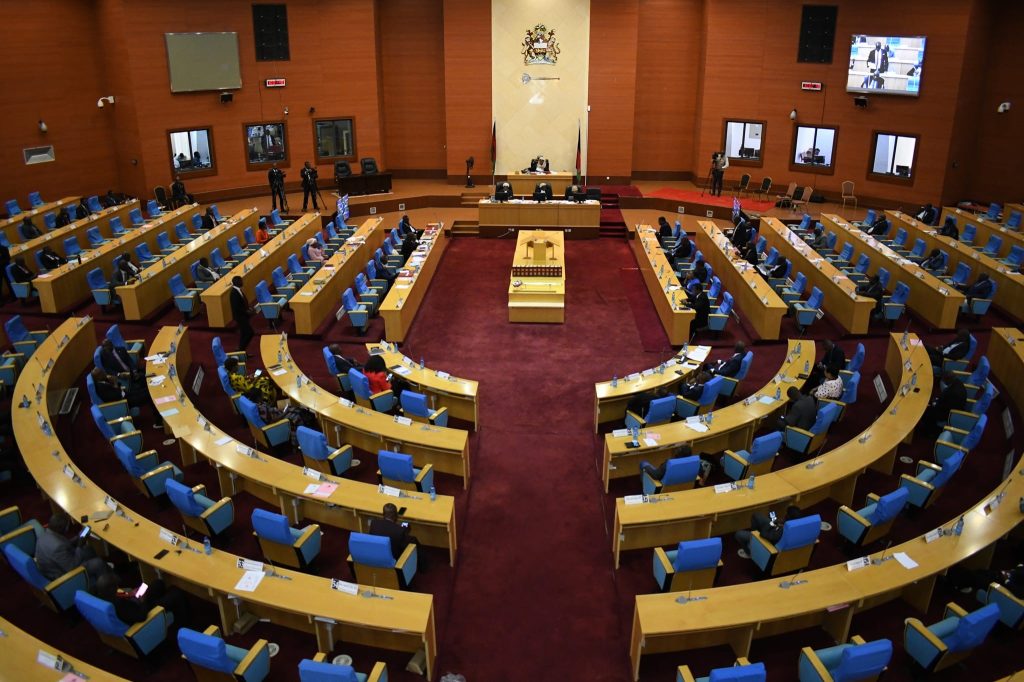
Parliaments often have very limited amounts of time to consider the Executive Budget Proposal (EBP) during the approval phase, lack the authority to do so in whole or in part, or, by rejecting the budget can signal non-confidence in the government and bring about an election.
Although international standards suggest the EBP should be tabled at least two months prior to the start of the new budget year, and best practice suggests at least three months prior to the start of the fiscal year, there is no standard in place for how much time legislatures actually get to review it.
- Despite the fact that over half of the OECD countries report having broad abilities to amend the budget, “most OECD parliaments only make minor adjustments to the Executive Budget Proposal (EBP).”
- According to the OBS (2023), in nearly 7 out of 10 countries, the legislature faces some limitations in its authority to amend the budget. Further, in only roughly 6 out 10 countries, did the legislature use its authority to amend the budget.
In the remaining countries, proposed amendments were not adopted, no amendments were offered, or the legislature did not have the authority to amend the budget (IBP 2017:30 and IBP 2024). This underscores the importance of civil society and parliamentary engagement during the budget formulation stage, as well as the potential need to advocate for more robust legislative scrutiny of the EBP during the approval phase.
- During the budget approval process, the draft budget is submitted to Parliament, where Parliament may debate, revise, and approve the budget.
- Legislative committees, including the finance or budget committee as well as sectoral committees, can scrutinize the various documents contained in the draft budget with testimony from technical experts and civil society organizations (Andrews 2014:3).
According to OBS best practices a specialized budget or finance committee should examine the EBP and publish a report with findings and recommendations prior to the budget being adopted. The committee should have one month or more to examine the EBP (OBS 112). The budget or finance committee may review the macroeconomic assumptions, debt forecast, and other key economic issues outlined in the budget document.
However, sectoral committees play a different role, often scrutinizing the appropriations under their remit. For example, the standing committee on health may review the appropriations for all ministries, departments and agencies under its remit. According to the OBS, sectoral committees should also have one month or more to examine the EBP and publish a report with findings and recommendations prior to the budget being adopted (OBS 113).
Budget approval concludes once the legislature has approved the budget, as tabled or with amendments; or alternatively, the legislature may reject the draft budget and/or replace the EBP with the legislature’s own proposal (IBP 2017).
Read more here.
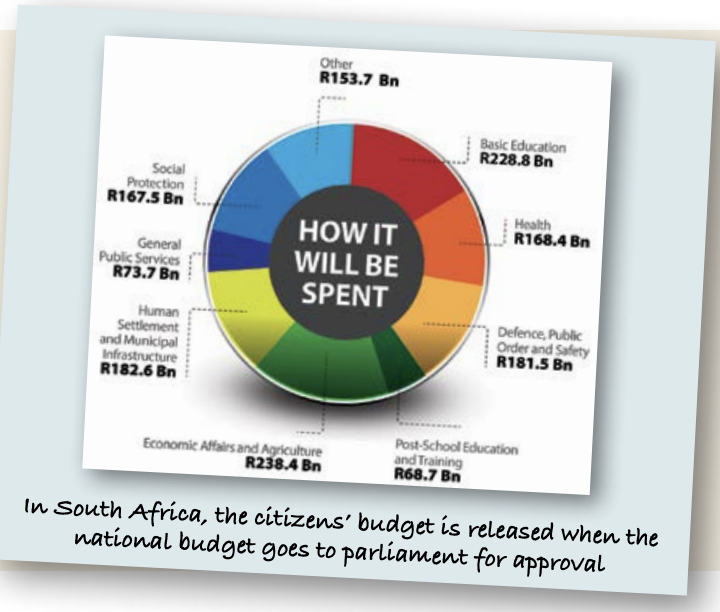
See CABRI, A Review of Citizens’ Budgets in Ten African Countries, Centurion, South Africa, 2016
Key Budget Document During Budget Approval Stage:
Executive Budget Proposal (EBP):
The Executive Budget Proposal (EBP) serves as the government’s principal document on fiscal issues for the upcoming budget year (IBP 2024b:16). It encompasses comprehensive revenue, expenditure, and debt projections; macroeconomic assumptions; historical and multi-year budget data; and key public policy directives. According to the International Budget Partnership, the draft EBP is among the most crucial budget documents, as it delineates the government’s policy objectives and fiscal strategies for the coming year—information often unavailable in other budget documents. This allows Parliament to fulfill its constitutional mandate of scrutinizing and approving the budget. For civil society organizations (CSOs), it is equally essential to understand the policy framework and financial allocations within the EBP, as this enables them to draw broader conclusions on pressing issues from multiple perspectives, and engage in informed advocacy across key sectors such as health and education.
According to the Public Expenditure and Financial Accountability program (PEFA), the EBP should include the information described here.
Once you have reviewed the PEFA criteria, refer to the following text, which has been reformulated into questions based on the PEFA criteria. These questions will guide you through the essential areas of focus for future budget analysis:
- Forecast of the Fiscal Deficit (or Surplus): What is the expected difference between government spending and revenue for the upcoming fiscal year, and will additional borrowing be needed to cover a deficit? This is important for CSOs because understanding whether the government will need to borrow additional funds helps them evaluate fiscal sustainability. CSOs can use this information to assess the long-term economic impact, question the need for new borrowing, and advocate for responsible fiscal policies that do not burden future generations with unsustainable debt levels.
- Actual Revenue, Expenditures, and Deficit: What were the actual revenue, expenditures, and fiscal balance (deficit or surplus) from two years ago, and how do these results compare to the upcoming budget proposal? This is important for CSOs because it allows them to compare past fiscal performance with future projections. By analyzing whether the government met its previous budget goals, CSOs can highlight inefficiencies, fiscal mismanagement, or trends that need to be addressed. This also strengthens advocacy efforts for transparency and improved budget execution.
- Current Fiscal Year’s Budget: How does the current fiscal year’s budget compare to the upcoming budget, and what are the revised estimates or anticipated outcomes based on actual data so far? This is important for CSOs because it helps them track whether the government is on course to meet its fiscal goals for the current year. Any deviations from the original plan, reflected in revised estimates, can signal areas where government spending or revenue collection is off target, allowing CSOs to push for timely corrections or adjustments.
- Aggregated and Detailed Budget Data: What are the revenue and expenditure figures for the previous, current, and upcoming budget years, and how are they classified? Additionally, how will any deficit be financed? This is important for CSOs because it enables them to examine whether public funds are being allocated equitably and transparently. Understanding how the government classifies expenditures and plans to finance deficits is key for CSOs advocating for sufficient funding for essential services, such as health and education, and for minimizing fiscal risks.
- Macroeconomic Assumptions: What are the estimated GDP growth, inflation, interest rates, and exchange rate figures that inform the budget’s revenue and expenditure estimates? This is important for CSOs because these assumptions influence whether the government’s budget is realistic. If the assumptions are overly optimistic, the budget could be at risk of failing to meet revenue targets or managing expenditures effectively. CSOs need to assess these assumptions to ensure that fiscal plans are grounded in credible economic forecasting.
- Estimate of Total Outstanding Debt: What is the estimated total outstanding debt at the beginning of the current fiscal year? This is important for CSOs because knowing the level of total outstanding debt allows them to evaluate the government’s debt management strategy. A high or growing debt burden may threaten fiscal stability and limit the government’s capacity to invest in critical sectors. CSOs can advocate for policies that balance the need for borrowing with the long-term impact on fiscal sustainability.
Click on the following to read some examples of the EBP in New Zealand and South Africa.
Citizen’s Budgets:
What are Citizen’s Budgets?
Citizen’s Budgets are simplified versions of key public finance documents, designed to make important budget information accessible to a general audience. They use clear language and visual aids to help non-specialist readers understand government financial decisions. While commonly available for the Executive Budget Proposal and Enacted Budget, Citizen’s Budgets should cover every key budget document throughout the budget cycle.
Although Citizen’s Budgets can be created by civil society organizations (CSOs), governments should take responsibility for producing them to demonstrate their commitment to transparency and public engagement.
Why are Citizen’s Budgets Important?
Citizen’s Budgets play a crucial role in ensuring the public understands how the budget impacts their daily lives. By offering a more accessible presentation of fiscal data, these documents enhance public awareness of how government funds are managed. Citizen’s Budgets also serve as a starting point, guiding citizens and CSOs toward more detailed documents, and empowering them to actively engage in the budget process and hold governments accountable.
What Information Should Citizen’s Budgets Include?
Citizen’s Budgets should be developed in consultation with civil society and the public to ensure they contain relevant and useful information. They typically include:
- Economic Assumptions: Predictions about economic growth, inflation, and whether the budget will have a surplus or deficit.
- Revenue Collection: Information on where the government’s funds come from.
- Spending Allocations: How and why funds are allocated to different sectors.
- Significant Policy Initiatives: Explanations of major changes in revenue or expenditure.
These elements help the public understand the broader fiscal landscape and encourage informed participation in fiscal oversight.
Simplified Access to Information: Citizen’s budgets are designed to present complex fiscal information in a simplified, non-technical way that is accessible to the general public. This makes it easier for CSOs to understand key budget data, policies, and government priorities, which is essential for advocacy and public engagement.
Promoting Transparency and Accountability: By utilizing citizen’s budgets, CSOs can help bridge the gap between the government’s budget decisions and the public’s understanding of these decisions. This can increase transparency and hold governments accountable for their fiscal policies and spending priorities.
Engaging the Public: CSOs can use citizen’s budgets as a tool to educate and mobilize the public, making it easier to engage communities in budget monitoring and advocacy efforts. This also empowers citizens to participate in the budget process and demand better services from their governments.
Monitoring and Advocacy: Citizen’s budgets provide an overview of where government funds are being allocated, allowing CSOs to track whether public funds are being spent in line with stated priorities, such as health, education, or infrastructure. CSOs can use this data to advocate for more equitable or efficient use of resources.
Monitoring and Advocacy: Citizen’s budgets can include specific breakdowns of how government funds are addressing gender-related issues. CSOs advocating for GRB can leverage this information to push for more gender-equitable policies and allocations in the budget.
According to the Collaborative Africa Budget Reform Initiative (CABRI):
- Despite the increasing number of African countries publishing Citizen’s Budgets, many remain too technical for the general public to understand. CABRI’s review of 10 African countries revealed that these documents often lack sufficient explanations of public finance terms, making them difficult for non-specialists to grasp.
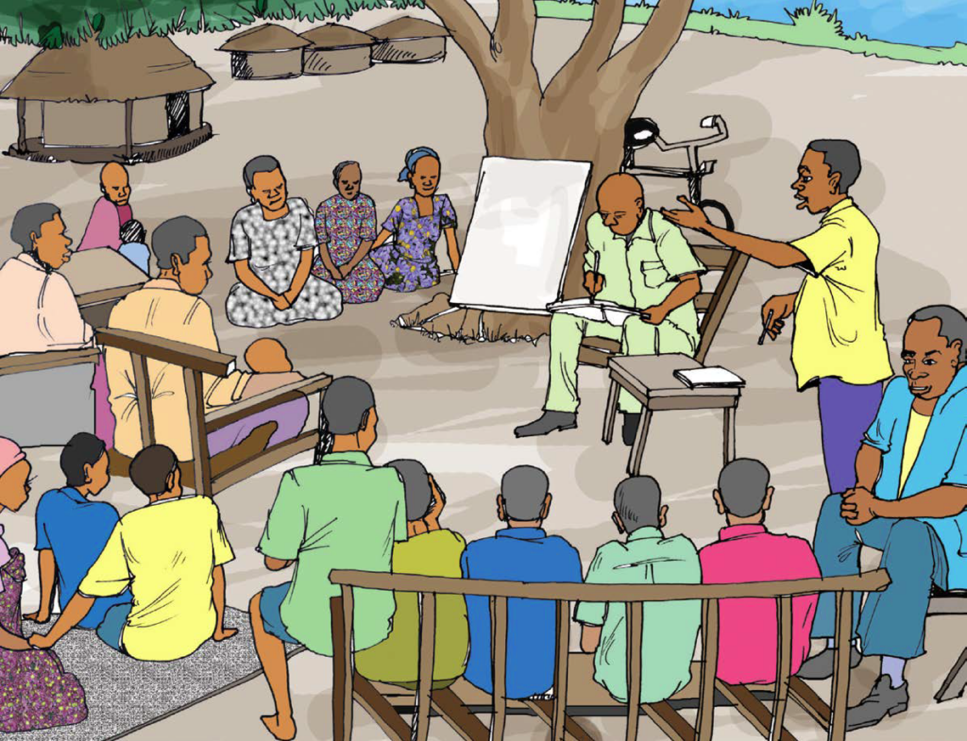
- Several countries, such as the Dominican Republic and Nigeria, have adopted creative approaches to disseminate budget information, including using comics, radio shows, and videos. These methods make budget data more engaging and understandable to a wider audience, promoting public participation and accountability.
8 Comments
Le budget citoyen est une version plus simple et moins technique des dispositions contenues dans le budget de l’Etat. C’est un document important qui permet d’une part, d’expliquer la loi de finances au grand public et d’autre part, de lui faciliter l’accessibilité à l’information budgétaire.
Le budget citoyen poursuit les objectifs suivants : (i) mettre à la disposition des citoyens les informations contenues dans la loi de finances en tant qu’instrument de transparence financière ; (ii) permettre l’appropriation du budget de l’Etat ; (iii) susciter chez les citoyens le désir de participer activement à la gestion de la chose publique et de veiller à la bonne exécution du budget de l’Etat.
Within the government budget formulation and approval, the Citizen’s budget play very important roles as it showcase the voice of the people as it enhance public awareness of how government funds are managed. Citizen’s Budgets also serve as a starting point, guiding citizens and CSOs toward more detailed documents, and empowering them to actively engage in the budget process and hold governments accountable
NOTE: The above point in the presentation is true and key…
Hi
Le budget citoyen présente les éléments suivant qui sont très importants:
Prédictions sur la croissance économique, l’inflation et si le budget aura un excédent ou un déficit.
Information sur la provenance des fonds du gouvernement.
Comment et pourquoi les fonds sont répartis aux différents secteurs.
Explications des principaux changements dans les recettes ou les dépenses.
Ces éléments aident le public à comprendre le paysage budgétaire plus large et encouragent une participation éclairée à la surveillance budgétaire.
well put
Citizen’s Budgets:
The public can better understand fiscal information by using Citizen’s Budgets, which are accessible and simplified versions of government budgets. They seek to provide lucid insights into the collection and expenditure of public funds by demythologizing the technical and frequently intricate details of government finances.
Transparency: By making budgetary data easily understandable, they improve government transparency. The public’s trust in the government is bolstered by this.
Public Involvement: Citizen’s Budgets promote increased public involvement in the budget process by making the budget more easily accessible. People can express their opinions, voice their concerns, and participate in thoughtful debates regarding the priorities for public spending.
They demand transparency from the government regarding its financial choices. When people
Citizens budget, a simplified version of government budget, play pivotal role within government budget approval as it strengthens the voices of the electorates, hitherto raising public awareness as well as empowering people to actively participate in the budget process thus holding their government to account. It also seeks to provide clearer picture into revenue collection and expenditure of public funds.
Citizen budgets are invaluable tools that should be utilized to make government documents more accessible to the public. This can enhance public participation by creating informed and participatory citizenry encouraging more people to actively engage in the budget process in Kenya, ultimately improving the overall budgetary process.