
SECTION 2.1 – OVERVIEW: PARLIAMENT’S ROLE IN BUDGET FORMULATION
Overview: In this section, we will explore the critical roles that parliament plays in both the formulation and approval stages of the budget process. We’ll look at how parliament can exert influence, the limitations they face, and how partnerships, especially with civil society, can enhance their impact. We’ll also examine a practical example from Kenya.
Parliament’s Role in Budget Formulation:
Overview of the budget cycle:
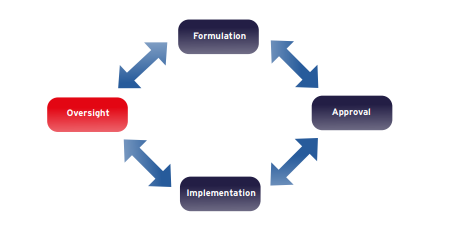
The budget cycle is composed of four stages: 1) formulation, when the executive drafts the budget proposal; 2) approval, when the legislature debates, alters, and approves the draft budget; 3) execution, when the executive branch collects revenue and spends money according to the allocations in the budget law; and 4) oversight, when the supreme audit institutions and legislature assess funds spent for compliance and performance (OBS 2018:15)
Legislatures can play a role in all four stages of the budget cycle. How do they do it?
- Formulation: The formulation stage is generally the purview of the executive branch. Legislatures often have limited time and scope to amend the budget during the approval process (which follows the budget formulation phase). Therefore, legislative involvement during budget formulation can be a critical opportunity for parliament to shape budget policies and priorities. As we’ll learn int his module, during budget formulation, legislatures can help set the broad parameters of the budget and define strategic priorities.
- Approval: After the executive submits the draft budget to parliament for approval, Parliament may debate, amend, and approve the draft budget. While in most countries, legislatures have a constitutional obligation to approve the budget, their “role and power in the budget process,” including their scope to amend the budget, vary widely from one country to another (Posner et al 2007:2).
- Execution: Once the budget is approved, legislatures can monitor budget implementation and provide oversight of any changes to the budget during budget execution.
- Audit/oversight: Finally, during the oversight phase, legislatures can review the audited financial statements as well as compliance and performance audit reports and ensure that the executive implements any recommendations arising from these reports. (IBP 2018: 30-31).
Let’s look at how the executive branch engages during the budget formulation stage:
The formulation of the budget largely occurs within the purview of the executive branch of government (IBP 2001:18). One division within the Finance Ministry, typically the budget office, coordinates and manages the process, but other entities within the executive branch, including other divisions of the Ministry of Finance (MoF), the Ministry of Planning, sectoral (or line) ministries (i.e. education and health), and sub-national entities are involved (Andrews et al 2014:3). The budget formulation stage can be sub-divided into two stages: strategic budgeting and budget preparation, as highlighted in a short introductory note on public financial management by Matt Andrews and colleagues (Andrews et al 2014:2).
- Strategic budgeting involves converting broad policy objectives into specific financial targets, which typically include estimates of total revenue, expenditure, and sometimes multi-year projections (Andrews et al., 2014:2). This phase is guided by macroeconomic forecasts that consider factors like economic growth prospects and demographic changes. It sets overarching budgetary goals and priorities, such as reducing deficits or increasing spending in critical sectors (IBP, 2001:18). This means that budget preparation involves drafting the government’s budget, including how much it expects to make and borrow. It sets limits for different departments and results in a final proposal that shows planned income and spending for the next year.
- Budget preparation builds on this by formulating the draft EBP, detailing revenue and borrowing projections, and working with spending entities to assess requests and set budgetary ceilings. This stage culminates in the final budget proposal, reflecting the planned revenue and expenditures for the upcoming budget year (Andrews et al., 2014:3). This means that budget preparation involves drafting the government’s budget, including how much money the government expects to make and borrow. It also sets limits on spending for different government departments, and the process ends with a final proposal showing the planned income and spending for the upcoming year.
Public consultations conducted by the executive branch during the formulation stage are generally more frequent than those carried out by parliament. This is because the executive branch typically plays a primary role in drafting policies and budgets, which necessitates direct engagement with stakeholders such as civil society, businesses, and the public. Public consultations at this stage allow the executive to gather input, refine proposals, and ensure broader participation in decision-making processes. The Open Budget Survey has questions that review whether the executive branch holds public consultations during the formulation phase. See in particular OBS questions 125, 126, 127 and 132. If you have not used the OBS as a research tool before, you will have the chance to do so later in this module. You can then circle back to examine how your country scored on these particular indicators.
Parliamentary Entry Points
While the executive generally leads budget formulation, parliaments can play a role during this stage of the budget process. The budget formulation stage provides a critical opportunity for parliaments and civil society to influence the policies and priorities reflected in the budget.
Parliamentary pre-budget hearings, pre-budget debate and scrutiny of government’s PBS are three ways for parliament to be active in the formulation phase in debating citizen needs and priorities.
As noted previously, public consultations are more commonly conducted by the executive branch at the formulation phase, as they engage directly with stakeholders to gather input and refine proposals.
On the other hand, while parliamentary consultations do occur, they tend to be less frequent or systematic, typically taking place during the approval or ex-post audit/oversight stages.
However, there is growing recognition of the need for parliaments to enhance public engagement, particularly in budget oversight, to improve accountability and ensure diverse perspectives are considered.
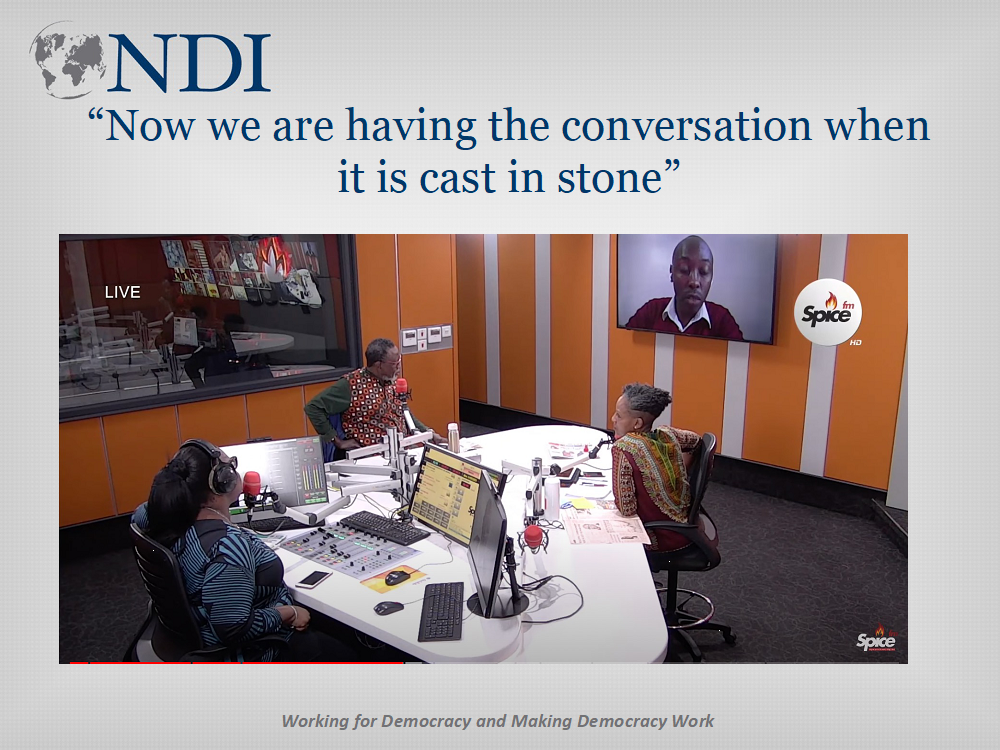
Take some time to watch this video on the role of parliament in the formulation phase:
Example/Video on the role of Parliament in the formulation phase:
Key Budget Document During Budget Formulation Stage:
Throughout modules 2 and 3, you will be introduced to key budget documents that, as a CSO, you need to familiarize yourself with in order to effectively conduct your budget work. In Module 2, we will focus on the pre-budget statement (PBS). In Module 3, we will become acquainted with other budget documents.
Pre-Budget Statement (PBS):
The PBS presents the executive’s economic and fiscal policy plans for the upcoming budget year and is published in advance of the EBP before program funding decisions are made (IBP 2024b:13). The document can help encourage debate on budget policies and priorities prior to the publication of the more detailed EBP.
In some countries, the PBS is associated with the Medium-term Expenditure Framework, which links policy and budgeting over a multi-year period. Best practice encourages the inclusion of the following information in the PBS:
- Macro-economic forecast upon which the budget will be based;
- Major revenue and expenditure policies and priorities; and
- Multi-year revenue and expenditure projections.
Examples of the PBS can be found in South Africa, Kenya and Malaysia.
Now it’s time to answer the questions and upload your answer in the comment box provided below!
13 Comments
Great Introduction
Nous retenons que le cycle budgétaire est composé de quatre étapes qui sont :
1) la formulation ,
2) L’approbation ;
3) l’exécution ,
4) la surveillance ,
strong starting point
Quite an interesting subject. It will surely increase our knowledge base
In the formulation phase of the budget, parliament plays role in ensuring that the budget is aligned with national priorities and that the allocation of resources is both transparent and accountable.
Le document de programmation des dépenses budgétaires et économique pluriannuel DPBEP 2025-2027 est un document glissant qui présente les orientations macro-économiques, les politiques budgétaires, les prévisions des dépenses et recettes sur 3 ans
This is very insightful.
Nice 👍🏾
une formation qui détaille les étapes du cycle budgétaire aussi avec les acteurs qui sont censés l ‘animer.
C’est parfait
c ‘est intéressant comme un outil pour mieux travailler sur l ‘élaboration du budget .
Great starting poin
Very insightful