
SECTION 2.2 – PARTICIPATORY ENGAGEMENT METHODS: ENTRY POINTS FOR CSOS
Overview This section focuses on participatory engagement methods and the various entry points available for CSOs to get involved in the budget process. It introduces the principles of public participation in fiscal policies as outlined by the Global Initiative for Fiscal Transparency (GIFT), discusses pre-budget consultations, public hearings, and the role of CSOs in these processes.
Background on Public Participation:
How public participation in the budget process can lead to more transparent, accountable, and effective budget processes:
- Early studies have shown that, “public participation in the budgeting process is linked to better government responsiveness, to more effective service delivery, and to greater willingness to pay taxes” (IBP 2020:47).
- By giving people a voice in budget decision-making and space to exert influence, public participation in the budget process can improve government decision-making and enhance trust between government and the public, even as governments face trade-offs (IBP 2024:34).
- In recent years, international consensus around the benefits of public participation has been growing, and following the publication of the Global Initiative for Fiscal Transparency’s Principles of Public Participation in Fiscal Policies, norms around what good quality participation looks like now exist (IBP 2022:15). International standard-setters such as the IMF, the OECD, and PEFA, have recognized the importance of public participation in the budget process through revisions to their key guidance.
Standard-setters now acknowledge that participation should take place across the four phases budget cycle (formulation, approval, execution, and oversight) and with the three government institutions engaged in the process (the executive, the legislature, and the Supreme Audit Institution (SAI)). In the context of parliamentary engagement with the budget, the Commonwealth Parliamentary Association’s Recommended Benchmarks for Democratic Legislatures recognizes the importance of public participation, stating that, “Opportunities shall be given for public input into the legislative and Committee process, including the budget process,” and that, “Information shall be provided to the public in a timely manner regarding matters under consideration by the Legislature (CPA 2018:13).”
- The 10 GIFT principles also offer the parameters of what good quality participation should look like and emphasizing principles such as inclusiveness, timeliness, comprehensiveness, and feedback (IBP 2022:23)
Watch these examples/videos on public participation and OBS:
In these clips, Sammy Obeng speaks on Transparency, civic participation and public accountability in Africa (source: Human Coined, Episode 28)
13:20 – 14:20 – Here is an interview with Sammy Obeng where he explains why civil society is so important when it comes to parliamentary oversight[MOU1] .
19:21 – 21:19 Here is an additional clip where Sammy Obeng discusses the Open Parliament Index and the importance of public participation.
Watch this video clips interview with David Robbins on OBS (source: Human Coined)
35:35 – 42:20 Here is a video on how public participation mechanisms are used in parliamentary oversight when considering inclusion of marginalized communities and line ministries involvement with public participation mechanisms and civil society. [MOU2]
Principles of Public Participation
See this infographic which outlines the GIFT Principles of Public Participation in Fiscal Policies. Try and match each of the descriptions listed below with the appropriate titles.
| Principle | Description |
| Accessibility | Disseminating complete fiscal information and other relevant data in formats that are easy to access, understand, use (and re-use), and transform. |
| Openness | Providing full information on and being responsive regarding the purpose of each engagement, along with its scope, constraints, intended outcomes, process and timeliness, as well as expected and actual results of participation. |
| Inclusiveness | Engaging a diverse range of stakeholders by pro-actively using multiple mechanisms to engage the public and considering all inputs irrespective of their source. |
| Respect for Self-Expression | Valuing the input and perspectives of all participants by allowing communities and individuals to choose the means of engagement they prefer, while recognizing that there may be groups that have standing to speak on behalf of others. |
| Timeliness | Allowing sufficient time in the budget process for the public to provide input at each phase. |
| Depth | Allowing for meaningful engagement rather than superficial consultation by providing relevant information (for example, highlighting key policy objectives, options, and trade-offs) and providing feedback on how inputs have been used or not used. |
| Proportionality | Matching the level of participation to the significance of the issue. |
| Sustainability | Ensuring ongoing opportunities for public engagement, institutionalizing participation where appropriate, and reviewing and evaluating experience to improve future engagement. |
| Complementarity | Ensuring public participation complement existing governance and accountability systems. |
| Reciprocity | Refers to all state and non-state actors all state and non-state entities taking part in public engagement activities should be open about their mission, the interests they seek to advance, and who they represent; should commit to and observe all agreed rules for engagement; and should cooperate to achieve the objectives of the engagement. |
Legislative engagement with the public during the budget process:
As highlighted earlier, the legislature can play a critical role during several phases of the budget process. Legislatures can:
- Question the underlying assumptions used to develop the budget;
- Help shape budget priorities;
- In some cases, amend the budget before approving it; and
- Scrutinize the audited financial statements as well as compliance and performance audit reports and ensure that the executive implements any recommendations arising from these reports. At each stage, input from the civil society and the public can augment legislative decision-making.
In particular, public hearings are an opportunity to improve legislative budget transparency as well as create space for the public to shape the draft budget before it is approved, helping to ensure that the budget reflects the public’s needs and priorities. At a later stage, public hearings can help enhance legislative oversight over budget implementation. Instances where members of the public reach out to individual parliamentarians or where unofficial hearings are organized by a subset of committee members are not considered public hearings (IBP 2024b: 150)
The format of a public hearing matters. A public hearing in and of itself does not necessarily guarantee opportunities for the public to provide input on the formulation of the draft budget.
For example, a legislature may hold a public hearing but not allow testimony from the public or may only allow invited individuals or groups (experts) to provide input (IBP 2024b: 150). Public hearings where citizens are allowed to testify and the legislature does not exert discretion in determining which members of the public or civil society organizations testify allow for the most meaningful participation with the legislature during budget formulation, according to the International Budget Partnership’s Open Budget Survey. In addition, legislatures should provide feedback to the public on the inputs it receives from them.
Legislatures may also use other means to collect public input, including for example inviting written submissions from civil society organizations and citizens or inviting a few individuals or groups (experts) to provide input. On their own, each of these mechanisms has unique drawbacks. The former does not allow for a two-way dialogue between the public and members of parliament, while the latter is not inclusive and limits participation to a few selected individuals or groups.
Encouragingly, the OBS 2023 finds that legislatures in over half of surveyed countries have mechanisms for engaging the public before the budget is approved. However, in roughly three out of four of these countries, legislatures only allow specific individuals or groups to provide input.
Public Participation during the Pre-Budget Debate in Parliament:
Creating spaces for public input during the pre-budget process can allow for public scrutiny and shape the broad strategic priorities and choices in the budget, rather than combining the discussion of priorities with the discussion of detailed allocations during budget approval (IBP 2018: 29).
As noted earlier, there are three entry points for civil society to engage with parliament during the pre-budget phase: (1) parliamentary committee’s review and scrutiny of the PBS; (2) pre-budget consultations; and (3) full parliamentary pre-budget debate in plenary. In addition, throughout the budget process, civil society organizations can engage in ongoing advocacy campaigns with individual members of parliament to draw attention to issues that have the potential to shape budget priorities.
Legislatures in some countries have introduced innovative mechanisms for engaging the public at these moments, which can serve as a model or starting point for parliaments in other countries.
- Example of entry point 1: In New Zealand, following the release of the PBS, the Finance and Expenditure Committee of Parliament holds pre-budget hearings and solicits both written submissions and oral testimony from members of the public. The contents of the hearing and submissions received are summarized in a report that is released following the consultations (IBP 2020:52). In another example, the Budget, Finance, and Economic Development Committees, along with the Sustainable Development Goal Committee conducts nationwide public consultations on budget priorities, following the Executive’s publication of the PBS. In addition to in-person consultations, the Committees also welcomed written submissions (https://www.veritaszim.net/node/5917).
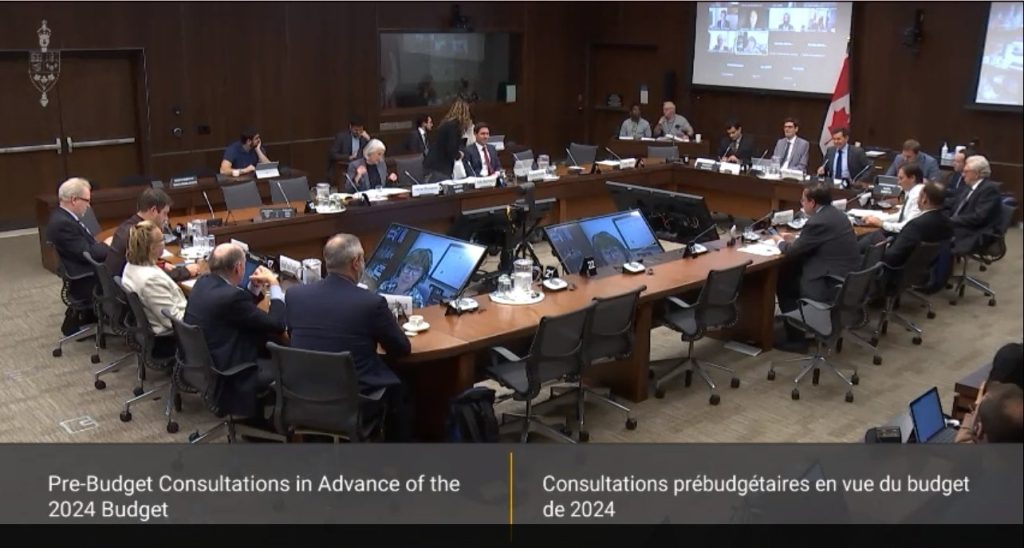
- Example of entry point 2: In some countries, legislatures conduct their own pre-budget consultations, independent of the executive’s publication of the PBS. For example, in Canada, the Standing Committee on Finance undertake pre-budget consultations before the Executive publishes the Pre-Budget Statement, and it consists of a two-phase process whereby the citizens and organizations are first requested to submit a 2,000 word or less written report. Witnesses are then selected from submitted reports to testify in public hearings. Importantly, the Committee holds meetings across Canada to increase the probability of a more diverse set of individuals and groups participating and issues a report that includes issues raised during the (IBP 2018:40).
How Can You Identify Entry Points?
Understanding the budget cycle is essential to knowing when and what a CSO can do to affect change. At different stages, the government has different goals to achieve and tasks that need to be undertaken. Therefore, understanding the budget cycle is critical to identifying and planning advocacy opportunities. (IBP Open and Accountable Budgeting Course:53).
Budget formulation, for example, is an opportunity to influence priorities and policies over the medium-term. Key entry points for civil society to engage with parliament during the budget formulation stages include: (1) Publication of the PBS by the executive; (2) Parliamentary pre-budget consultations; (3) sector committee review of the spending in the draft budget related to the sector for which they are responsible; (4) review of the draft budget by a specialized budget or finance committee (Dubrow 2020:4). In some cases, as discussed above, legislatures may establish mechanisms to engage with the public during its deliberation of the PBS and EBP. In other instances, civil society organizations may have to identify and create informal opportunities to engage parliament, including seeking opportunities to engage with parliamentarians directly. Civil society engagement during budget formulation – whether formal or informal — may be undertaken in partnership with other organizations and actors.
In addition to understanding the budget cycle, it is also important to understand the key actors in the budget system to help identify who can help civil society affect change and how best to formulate key messages (IBP Open and Accountable Budgeting Course:53).
Watch this example/video of effective CSO engagement in budget formulation/approval
Clip from Human Coined interview with David Robbins on OBS
17:56 – 19:20 Here is a clip explaining why public participation and CSO work in aiding passing legislation
After watching the video, reflect on these questions.
1. What formal and/or informal opportunities exist to engage with the legislature in the formulation or approval stage in your country?
2. How have you or your organization engaged with the legislature during the formulation or approval stage in your country?
3. What obstacles have you experienced in engaging with the legislature during the formulation and approval phases? How have you or might you overcome these challenges?
4. What organizations or actors might you partner with when engaging with the legislature?
Upload your answers in the comment box provided below
Your answers will be shared with only the course facilitator via [email protected]
-
1-Il existe des possibilités formelles et/ou informelles tel que les consultations parlementaires prébudgétaires ; le débat prébudgétaire complet du Parlement en séance plénière. l’examen par le comité sectoriel des dépenses du projet de budget liées au secteur dont il est responsable ; l’examen du projet de budget par un comité spécialisé du budget ou des finance existe pour s’engager avec le pouvoir législatif dans la phase de formulation ou d’approbation dans votre pays .
2- Notre organisation collabore avec le pouvoir législatif au cours de la phase de formulation ou d’approbation au Cameroun en participant à l’élaboration et examen des questions orales avec les parlementaires, nous sommes convié aux consultations parlementaires prébudgétaires et au débat d’orientation budgétaire, prébudgétaire complet du Parlement en séance plénière.
3- Quels obstacles que nous avons rencontrés dans nos échanges avec le pouvoir législatif au cours des phases de formulation et d’approbation sont i) le Manque de reconnaissance: Nous sommes souvent perçues comme moins légitimes par rapport aux institutions gouvernementales ou aux groupes d’intérêt bien établis. Notre solution pour surmonter la difficulté à consister à renforcer notre crédibilité par des recherches et des données solides, et établir des partenariats ou alliances avec d’autres acteurs influents tel que IBP, GIFT….MINFI. Nous faisons aussi souvent face aux pressions ou intimidations de la part du Gouvernement. Comme solution nous avons mis en place un réseau de soutien et établit des partenariats internationaux. Nous avons aussi un problème de financement pour mener à bien nos activités de plaidoyer. Comme solution nous cherchons à diversifier nos ressource de financement.
4 Nous pouvons associer lors de vos échanges avec le pouvoir législatif les les organisations ou acteurs tels que: Les communautés à la base, Les médias traditionnels et les réseaux sociaux les autorités religieuses et traditionnelles et nos partenaires internationaux. -
In Kenya, formal opportunities to engage with the legislature include public hearings and consultations by parliamentary committees like Budget and Appropriations/Finance Committee. Informally, CSOs can lobby MPs, organize media campaigns, and use public platforms to influence budget priorities.
Okoa Uchumi/TISA has engaged through town halls, social media advocacy, position papers, and working closely with parliamentary committees to highlight citizen-centered issues and transparency in budgeting.
Challenges include lack of time for scrutiny, and limited transparency and intimidation. Empowering citizens to access the information, identify gaps,running of advocacy campaigns to apply pressure.
When engaging with legislature we partner with committees, individual MPS, treasury ,OAG and COB
-
Public participation forums, Online submission of memoranda or proposals, involvement of legislators as champions in our work, engagement with parliamentary caucuses
Through public participation and submission of memoranda
Consideration of public views in approved budgets. In kenya the Gen Z demonstrated against the passing of finance bill 2024 against the public wishes which was meant to finance the years budget and it was withdrawn
Parliamentary caucuses such as Kenya Young Parliamentarians Network and Parliamentary oversight organizations like Mzalendo
-
1. Formal and Informal Opportunities to Engage with the Legislature in Liberia
In Liberia, several formal and informal opportunities exist to engage with the legislature during the formulation and approval stages of the national budget:
– Formal Opportunities
– Public Hearings: The Legislature occasionally conducts public budget hearings, allowing civil society organizations (CSOs) like Integrity Watch Liberia (IWL) to present recommendations.
– Policy Papers: Organizations can submit position papers to legislative committees, particularly the Ways, Means, and Finance Committee.
– Stakeholder Consultations:Government ministries sometimes involve CSOs in pre-budget consultations to discuss national priorities.
– Informal Opportunities:
– Networking: Leveraging relationships with individual legislators to advocate for transparency and accountability in budget processes.
– Media Campaigns: Engaging through radio talk shows, press releases, and social media to indirectly influence legislative discussions.2. Engagement by Integrity Watch Liberia During Formulation and Approval Stages
Integrity Watch Liberia (IWL) has engaged with the legislature in several ways, including:
– Advocacy and Policy Recommendations: Preparing and presenting policy briefs to legislative committees on areas such as anti-corruption, revenue sharing, and local government reforms.
– Capacity Building: Training lawmakers and their staff on transparency, accountability, and fiscal management to improve decision-making.
– Community Engagement Reports: Amplifying the voices of local communities through reports that highlight citizens’ concerns and priorities, which are shared with legislators.3. Obstacles Experienced in Engaging with the Legislature and Strategies to Overcome Them
Challenges:
– Limited Access to Decision-Makers: Gaining direct access to legislators can be difficult due to bureaucratic barriers.
– Political Resistance*: Legislators may be resistant to recommendations that challenge their interests or expose inefficiencies.
Resource Constraints: Limited funding for sustained advocacy efforts and research.
– Lack of Timely Information:Difficulty in obtaining budget-related documents or updates needed for meaningful engagement.Strategies to Overcome Challenges:
– Building Relationships: Developing long-term partnerships with legislative staff and committee members to foster trust and collaboration.
– Leveraging Public Pressure: Using media platforms to increase public awareness and encourage citizens to demand greater legislative accountability.
– Strengthening Coalitions: Collaborating with other CSOs to pool resources and amplify advocacy efforts.
– Capacity Development: Conducting targeted training for staff to enhance technical expertise in budget analysis and advocacy.4. Potential Partners for Legislative Engagement
When engaging with the legislature, IWL can collaborate with:
– Civil Society Organizations:Groups such as the Center for Transparency and Accountability in Liberia (CENTAL) and the Institute for Research and Democratic Development (IREDD) for joint advocacy.
– Media Outlets:Independent radio stations and news platforms to amplify advocacy messages and promote public discourse.
– Development Partners:International organizations like USAID and UNDP that support governance and fiscal accountability initiatives.
– Academic Institutions: Universities and think tanks for research support and evidence-based recommendations.
– Community-Based Organizations (CBOs): To ensure grassroots concerns are represented in legislative discussions. -
1. Chances to Interact with the Lawmaker
Official Possibilities:Parliamentary Committees: Participate through official channels such as committees.
Public Hearings: Attend hearings where legislation is being proposed.
Question Time: During question time sessions, interact with MPs.
Unofficial Possibilities:
Constituency Meetings: Consistent gatherings with Members of Parliament in their respective districts.
Social Media: Use social media sites to interact with lawmakers.
Cooperate with civil society organizations (CSOs) that have cultivated connections with the legislature.2. Individual/Group Involvement
Although I can’t speak from personal experience, organizations can participate by:
Taking part in public hearings and offering feedback on proposed laws.
Working closely with MPs on policy matters is known as collaboration.
Using Social Media: Communicating online with lawmakers and their constituents.3. Difficulties and Overcoming Them
Challenges:
Restricted Access: It can be challenging to reach MPs and parliamentary procedures.
Political Sensitivities: Handling biases and political sensitivities.
Resource Limitations: Insufficient funds for ongoing involvement.Overcoming Obstacles:
Relationship Building: Developing close bonds with parliamentary staff and members of parliament.
Leveraging CSOs: Joining forces with CSOs to increase resources and voices.
Making Use of Technology: Making use of technology to promote interaction and information exchange.4. Possible Collaborations
Collaborate with both domestic and foreign civil society organizations (CSOs).
Development Partners: Work together with development partners who prioritize democracy and governance.
Experts and Scholars: Consult with experts and scholars regarding the legislative process. -
Quelles sont les possibilités formelles et/ou informelles de dialoguer avec le pouvoir législatif dans la phase de formulation ou d’approbation dans votre pays ?
Nous avons plusieurs possibilités de dialoguer avec le pouvoir législatif au Niger à travers les exigences des loi portant sur la transparence budgétaire comme le code de transparence de UEMOA domestiqué par la législation nationale donc des consultations sont organisées par le parlement pour écouter des groupes organisés et citoyens par le billet des consultations populaires dans le cadre de la mise en œuvre du budget programme2. Comment vous-ou votre organisation vous-même-vous êtes-vous engagés auprès du pouvoir législatif au cours de la phase de formulation ou d’approbation dans votre pays ?
Nous produisons des évidences à travers les analyses de projet de loi des finances et la loi de règlement pour permettre aux parlements mieux cerner les orientations des politiques publiques proposées par le gouvernement du Niger.
Nous les invitons aux sessions citoyennes que nous organisons pour qu’ils discutent directement avec les citoyens et recueillir les besoins et priorités3. Quels obstacles avez-vous rencontrés dans votre collaboration avec le législateur pendant les phases de formulation et d’approbation ? Comment avez-vous surmonté ou pourriez-vous surmonter ces défis ?
Les refus des certains partis politiques à leurs élus de prendre par aux rencontres que nous organisons et le documents des évidences que nous partageons
il y’a aussi le niveau de compréhension des certains parlementaires
Les mots d’ordre donnés aux parlementaires par l’exécutif de ne pas modifier même une virgule dans la loi de finances proposée
Pour les surmonter nous utilisons les médias qui publient directement les résultats de nos travaux
nous écrivons des correspondances directement aux bureaux politiques pour solliciter la participation de leurs militants4. Avec quelles organisations ou acteurs pourriez-vous associer lorsque vous vous engagez auprès de l’Assemblée législative ?
Les Mediaş , les partenaires techniques et financiers tels que la Banque Mondiale , le FMI, l’UE qui pourront conditionner leurs appuis budgétaires aux respects des règles et principes de la transparence budgétaire -
Engaging with the legislature during the formulation and approval phases of the budget can be challenging for Civil Society Organizations (CSOs).
Obstacle: Accessing legislators and key budget decision-makers can be difficult. Legislators may be preoccupied with other priorities, and there may be limited opportunities for direct engagement during the early phases of budget formulation.
Solution: CSOs can build strong relationships with parliamentary committees and individual legislators well in advance of the budget process. This involves regular outreach, offering expert analysis on key budget issues, and collaborating with Parliamentarians on shared priorities. Building trust through consistent engagement and providing valuable information can help CSOs gain access during key budget discussions. -
What formal or informal opportunities exist to engage with the legislature in the formulation or approval stage in Sierra Leone
Answer
1. Participating in public hearings through official invitation
2. Collaborate with the mediaHow have you or your organization engage with the legislature during the formulation or approval stage in Sierra Leone
Answer
1. Interaction with law makers has strengthened the relationship between us
2. Holding dialogue with certain MPs on issues of public interest is yielding dividend. The media and other through electronic medium is a plus.What obstacles have you experienced in engaging with the legislature during the formation or approval stage?
Answer
-, Accessing some MPs can be extremely difficult
– insufficient funds to participate in the budget processOvercoming the Challenges
– establish cordial relationship with parliamentary staff and other actors in budget work
– interrupted communication betwern parliament and CSOs
– official invitation to participate in the budget process should be timelyWhat organizations or actors might you partner with when engaging with the legislature ?
Answer
– Budget Advocacy Network
– International and continental outfits monitoring parliamentary proceedings on budget -
Dans mon pays plusieurs canaux formels existent pour la participation des OSC à la phase de formulation et d’approbation. Il s’agit de la présentation selon le calendrier budgétaire en février des priorités des populations portées par la société civile à la phase de formulation et d’élaboration du projet de DPBEP. Ensuite nous présentons au niveau des ministères sectoriels ces priorités pour leurs prise en compte dans les DPPD qui sont les documents pluriannuels sectoriels. Un suivi rigoureux est fait de ces documents avant le débat d’orientation budgétaire. Le premier niveau de participation au niveau de l’assemblée nationale est la participation au débat d’orientation budgétaire. Ensuite nous avons les rencontres avec les commissions pour l’exposition de nos doléances et enfin la participation aux audiences publiques sur le projet de budget.
Mon organisation collabore avec le pouvoir législatif (DGB), la DGE et les ministères au cours de la phase de formulation et avec les commissions finances et échange pendant la phase d’approbation
Les obstacles sont la réduction de marge de manœuvre pour la prise en compte des doléances des OSC pendant la phase d’approbation. Selon la LOLF, le principe d’équilibre budgétaire que pour une dépense soit ajoutée dans le projet de budget, il faut trouver les recettes ou sources de financement. Ce principe fait que les doléances présentées à la phase d’approbation ne sont prise en compte.
Mon organisation est un réseau de près 90 membres donc les OSC membres sont associées avec les faitières des OSC de mon pays. -
1. What formal and/or informal opportunities exist to engage with the legislature in the formulation or approval stage in your country?
Our parliament has designated House Committees which from time to time hold public participation in the formulation or approval stage.2. How have you or your organization engaged with the legislature during the formulation or approval stage in your country?
Yes.3. What obstacles have you experienced in engaging with the legislature during the formulation and approval phases? How have you or might you overcome these challenges?
Most of the input are not implemented immediately.4. What organizations or actors might you partner with when engaging with the legislature?
Most CSOs within Kenya present great opportunities for partnership. Especially where we need to carry out civic education etc -
Notre organisation ne collabore pas directement avec le parlement lors de l ‘ élaboration du budget mais après cette formation ,je serai outillé a mener cette activité.
-
Notre organisation ne collabore pas directement avec le parlement lors de l’élaboration du budget


Share your impressions and contributions with other learners in the comment section provided
-
November 9, 2024 12:36 pm
1-Il existe des possibilités formelles et/ou informelles tel que les consultations parlementaires prébudgétaires ; le débat prébudgétaire complet du Parlement en séance plénière. l’examen par le comité sectoriel des dépenses du projet de budget liées au secteur dont il est responsable ; l’examen du projet de budget par un comité spécialisé du budget ou des finance existe pour s’engager avec le pouvoir législatif dans la phase de formulation ou d’approbation dans votre pays .
2- Notre organisation collabore avec le pouvoir législatif au cours de la phase de formulation ou d’approbation au Cameroun en participant à l’élaboration et examen des questions orales avec les parlementaires, nous sommes convié aux consultations parlementaires prébudgétaires et au débat d’orientation budgétaire, prébudgétaire complet du Parlement en séance plénière.
3- Quels obstacles que nous avons rencontrés dans nos échanges avec le pouvoir législatif au cours des phases de formulation et d’approbation sont i) le Manque de reconnaissance: Nous sommes souvent perçues comme moins légitimes par rapport aux institutions gouvernementales ou aux groupes d’intérêt bien établis. Notre solution pour surmonter la difficulté à consister à renforcer notre crédibilité par des recherches et des données solides, et établir des partenariats ou alliances avec d’autres acteurs influents tel que IBP, GIFT….MINFI. Nous faisons aussi souvent face aux pressions ou intimidations de la part du Gouvernement. Comme solution nous avons mis en place un réseau de soutien et établit des partenariats internationaux. Nous avons aussi un problème de financement pour mener à bien nos activités de plaidoyer. Comme solution nous cherchons à diversifier nos ressource de financement.
4 Nous pouvons associer lors de vos échanges avec le pouvoir législatif les les organisations ou acteurs tels que: Les communautés à la base, Les médias traditionnels et les réseaux sociaux les autorités religieuses et traditionnelles et nos partenaires internationaux. -
November 10, 2024 1:58 pm
In Kenya, formal opportunities to engage with the legislature include public hearings and consultations by parliamentary committees like Budget and Appropriations/Finance Committee. Informally, CSOs can lobby MPs, organize media campaigns, and use public platforms to influence budget priorities.
Okoa Uchumi/TISA has engaged through town halls, social media advocacy, position papers, and working closely with parliamentary committees to highlight citizen-centered issues and transparency in budgeting.
Challenges include lack of time for scrutiny, and limited transparency and intimidation. Empowering citizens to access the information, identify gaps,running of advocacy campaigns to apply pressure.
When engaging with legislature we partner with committees, individual MPS, treasury ,OAG and COB
-
November 14, 2024 6:36 am
Public participation forums, Online submission of memoranda or proposals, involvement of legislators as champions in our work, engagement with parliamentary caucuses
Through public participation and submission of memoranda
Consideration of public views in approved budgets. In kenya the Gen Z demonstrated against the passing of finance bill 2024 against the public wishes which was meant to finance the years budget and it was withdrawn
Parliamentary caucuses such as Kenya Young Parliamentarians Network and Parliamentary oversight organizations like Mzalendo
-
November 18, 2024 2:18 am
1. Formal and Informal Opportunities to Engage with the Legislature in Liberia
In Liberia, several formal and informal opportunities exist to engage with the legislature during the formulation and approval stages of the national budget:
– Formal Opportunities
– Public Hearings: The Legislature occasionally conducts public budget hearings, allowing civil society organizations (CSOs) like Integrity Watch Liberia (IWL) to present recommendations.
– Policy Papers: Organizations can submit position papers to legislative committees, particularly the Ways, Means, and Finance Committee.
– Stakeholder Consultations:Government ministries sometimes involve CSOs in pre-budget consultations to discuss national priorities.
– Informal Opportunities:
– Networking: Leveraging relationships with individual legislators to advocate for transparency and accountability in budget processes.
– Media Campaigns: Engaging through radio talk shows, press releases, and social media to indirectly influence legislative discussions.2. Engagement by Integrity Watch Liberia During Formulation and Approval Stages
Integrity Watch Liberia (IWL) has engaged with the legislature in several ways, including:
– Advocacy and Policy Recommendations: Preparing and presenting policy briefs to legislative committees on areas such as anti-corruption, revenue sharing, and local government reforms.
– Capacity Building: Training lawmakers and their staff on transparency, accountability, and fiscal management to improve decision-making.
– Community Engagement Reports: Amplifying the voices of local communities through reports that highlight citizens’ concerns and priorities, which are shared with legislators.3. Obstacles Experienced in Engaging with the Legislature and Strategies to Overcome Them
Challenges:
– Limited Access to Decision-Makers: Gaining direct access to legislators can be difficult due to bureaucratic barriers.
– Political Resistance*: Legislators may be resistant to recommendations that challenge their interests or expose inefficiencies.
Resource Constraints: Limited funding for sustained advocacy efforts and research.
– Lack of Timely Information:Difficulty in obtaining budget-related documents or updates needed for meaningful engagement.Strategies to Overcome Challenges:
– Building Relationships: Developing long-term partnerships with legislative staff and committee members to foster trust and collaboration.
– Leveraging Public Pressure: Using media platforms to increase public awareness and encourage citizens to demand greater legislative accountability.
– Strengthening Coalitions: Collaborating with other CSOs to pool resources and amplify advocacy efforts.
– Capacity Development: Conducting targeted training for staff to enhance technical expertise in budget analysis and advocacy.4. Potential Partners for Legislative Engagement
When engaging with the legislature, IWL can collaborate with:
– Civil Society Organizations:Groups such as the Center for Transparency and Accountability in Liberia (CENTAL) and the Institute for Research and Democratic Development (IREDD) for joint advocacy.
– Media Outlets:Independent radio stations and news platforms to amplify advocacy messages and promote public discourse.
– Development Partners:International organizations like USAID and UNDP that support governance and fiscal accountability initiatives.
– Academic Institutions: Universities and think tanks for research support and evidence-based recommendations.
– Community-Based Organizations (CBOs): To ensure grassroots concerns are represented in legislative discussions. -
November 18, 2024 2:58 am
1. Chances to Interact with the Lawmaker
Official Possibilities:Parliamentary Committees: Participate through official channels such as committees.
Public Hearings: Attend hearings where legislation is being proposed.
Question Time: During question time sessions, interact with MPs.
Unofficial Possibilities:
Constituency Meetings: Consistent gatherings with Members of Parliament in their respective districts.
Social Media: Use social media sites to interact with lawmakers.
Cooperate with civil society organizations (CSOs) that have cultivated connections with the legislature.2. Individual/Group Involvement
Although I can’t speak from personal experience, organizations can participate by:
Taking part in public hearings and offering feedback on proposed laws.
Working closely with MPs on policy matters is known as collaboration.
Using Social Media: Communicating online with lawmakers and their constituents.3. Difficulties and Overcoming Them
Challenges:
Restricted Access: It can be challenging to reach MPs and parliamentary procedures.
Political Sensitivities: Handling biases and political sensitivities.
Resource Limitations: Insufficient funds for ongoing involvement.Overcoming Obstacles:
Relationship Building: Developing close bonds with parliamentary staff and members of parliament.
Leveraging CSOs: Joining forces with CSOs to increase resources and voices.
Making Use of Technology: Making use of technology to promote interaction and information exchange.4. Possible Collaborations
Collaborate with both domestic and foreign civil society organizations (CSOs).
Development Partners: Work together with development partners who prioritize democracy and governance.
Experts and Scholars: Consult with experts and scholars regarding the legislative process. -
November 23, 2024 9:10 am
Quelles sont les possibilités formelles et/ou informelles de dialoguer avec le pouvoir législatif dans la phase de formulation ou d’approbation dans votre pays ?
Nous avons plusieurs possibilités de dialoguer avec le pouvoir législatif au Niger à travers les exigences des loi portant sur la transparence budgétaire comme le code de transparence de UEMOA domestiqué par la législation nationale donc des consultations sont organisées par le parlement pour écouter des groupes organisés et citoyens par le billet des consultations populaires dans le cadre de la mise en œuvre du budget programme2. Comment vous-ou votre organisation vous-même-vous êtes-vous engagés auprès du pouvoir législatif au cours de la phase de formulation ou d’approbation dans votre pays ?
Nous produisons des évidences à travers les analyses de projet de loi des finances et la loi de règlement pour permettre aux parlements mieux cerner les orientations des politiques publiques proposées par le gouvernement du Niger.
Nous les invitons aux sessions citoyennes que nous organisons pour qu’ils discutent directement avec les citoyens et recueillir les besoins et priorités3. Quels obstacles avez-vous rencontrés dans votre collaboration avec le législateur pendant les phases de formulation et d’approbation ? Comment avez-vous surmonté ou pourriez-vous surmonter ces défis ?
Les refus des certains partis politiques à leurs élus de prendre par aux rencontres que nous organisons et le documents des évidences que nous partageons
il y’a aussi le niveau de compréhension des certains parlementaires
Les mots d’ordre donnés aux parlementaires par l’exécutif de ne pas modifier même une virgule dans la loi de finances proposée
Pour les surmonter nous utilisons les médias qui publient directement les résultats de nos travaux
nous écrivons des correspondances directement aux bureaux politiques pour solliciter la participation de leurs militants4. Avec quelles organisations ou acteurs pourriez-vous associer lorsque vous vous engagez auprès de l’Assemblée législative ?
Les Mediaş , les partenaires techniques et financiers tels que la Banque Mondiale , le FMI, l’UE qui pourront conditionner leurs appuis budgétaires aux respects des règles et principes de la transparence budgétaire -
December 2, 2024 3:12 pm
Engaging with the legislature during the formulation and approval phases of the budget can be challenging for Civil Society Organizations (CSOs).
Obstacle: Accessing legislators and key budget decision-makers can be difficult. Legislators may be preoccupied with other priorities, and there may be limited opportunities for direct engagement during the early phases of budget formulation.
Solution: CSOs can build strong relationships with parliamentary committees and individual legislators well in advance of the budget process. This involves regular outreach, offering expert analysis on key budget issues, and collaborating with Parliamentarians on shared priorities. Building trust through consistent engagement and providing valuable information can help CSOs gain access during key budget discussions. -
December 4, 2024 4:48 am
What formal or informal opportunities exist to engage with the legislature in the formulation or approval stage in Sierra Leone
Answer
1. Participating in public hearings through official invitation
2. Collaborate with the mediaHow have you or your organization engage with the legislature during the formulation or approval stage in Sierra Leone
Answer
1. Interaction with law makers has strengthened the relationship between us
2. Holding dialogue with certain MPs on issues of public interest is yielding dividend. The media and other through electronic medium is a plus.What obstacles have you experienced in engaging with the legislature during the formation or approval stage?
Answer
-, Accessing some MPs can be extremely difficult
– insufficient funds to participate in the budget processOvercoming the Challenges
– establish cordial relationship with parliamentary staff and other actors in budget work
– interrupted communication betwern parliament and CSOs
– official invitation to participate in the budget process should be timelyWhat organizations or actors might you partner with when engaging with the legislature ?
Answer
– Budget Advocacy Network
– International and continental outfits monitoring parliamentary proceedings on budget -
December 5, 2024 1:41 am
Dans mon pays plusieurs canaux formels existent pour la participation des OSC à la phase de formulation et d’approbation. Il s’agit de la présentation selon le calendrier budgétaire en février des priorités des populations portées par la société civile à la phase de formulation et d’élaboration du projet de DPBEP. Ensuite nous présentons au niveau des ministères sectoriels ces priorités pour leurs prise en compte dans les DPPD qui sont les documents pluriannuels sectoriels. Un suivi rigoureux est fait de ces documents avant le débat d’orientation budgétaire. Le premier niveau de participation au niveau de l’assemblée nationale est la participation au débat d’orientation budgétaire. Ensuite nous avons les rencontres avec les commissions pour l’exposition de nos doléances et enfin la participation aux audiences publiques sur le projet de budget.
Mon organisation collabore avec le pouvoir législatif (DGB), la DGE et les ministères au cours de la phase de formulation et avec les commissions finances et échange pendant la phase d’approbation
Les obstacles sont la réduction de marge de manœuvre pour la prise en compte des doléances des OSC pendant la phase d’approbation. Selon la LOLF, le principe d’équilibre budgétaire que pour une dépense soit ajoutée dans le projet de budget, il faut trouver les recettes ou sources de financement. Ce principe fait que les doléances présentées à la phase d’approbation ne sont prise en compte.
Mon organisation est un réseau de près 90 membres donc les OSC membres sont associées avec les faitières des OSC de mon pays. -
December 5, 2024 6:22 am
1. What formal and/or informal opportunities exist to engage with the legislature in the formulation or approval stage in your country?
Our parliament has designated House Committees which from time to time hold public participation in the formulation or approval stage.2. How have you or your organization engaged with the legislature during the formulation or approval stage in your country?
Yes.3. What obstacles have you experienced in engaging with the legislature during the formulation and approval phases? How have you or might you overcome these challenges?
Most of the input are not implemented immediately.4. What organizations or actors might you partner with when engaging with the legislature?
Most CSOs within Kenya present great opportunities for partnership. Especially where we need to carry out civic education etc -
January 10, 2025 3:55 pm
Notre organisation ne collabore pas directement avec le parlement lors de l ‘ élaboration du budget mais après cette formation ,je serai outillé a mener cette activité.
-
January 10, 2025 4:58 pm
Notre organisation ne collabore pas directement avec le parlement lors de l’élaboration du budget
Leave a Reply